The Government of India sought to create a national identity system for India’s textile cluster development programme, positioning textile parks as catalysts for industrial growth, regional employment and craft-led economic development.
EuMo developed the brand strategy, identity architecture and environmental branding system for the Government of India Ministry of Textiles’ Cluster Development Initiative, covering 30 textile parks across India. Conceived as a first-of-its-kind national textile infrastructure branding programme, the intervention created a unified yet regionally differentiated identity system that strengthened the visibility, cultural relevance and collective positioning of India’s textile manufacturing ecosystem.
Government
Brand Experience
Customer Experience
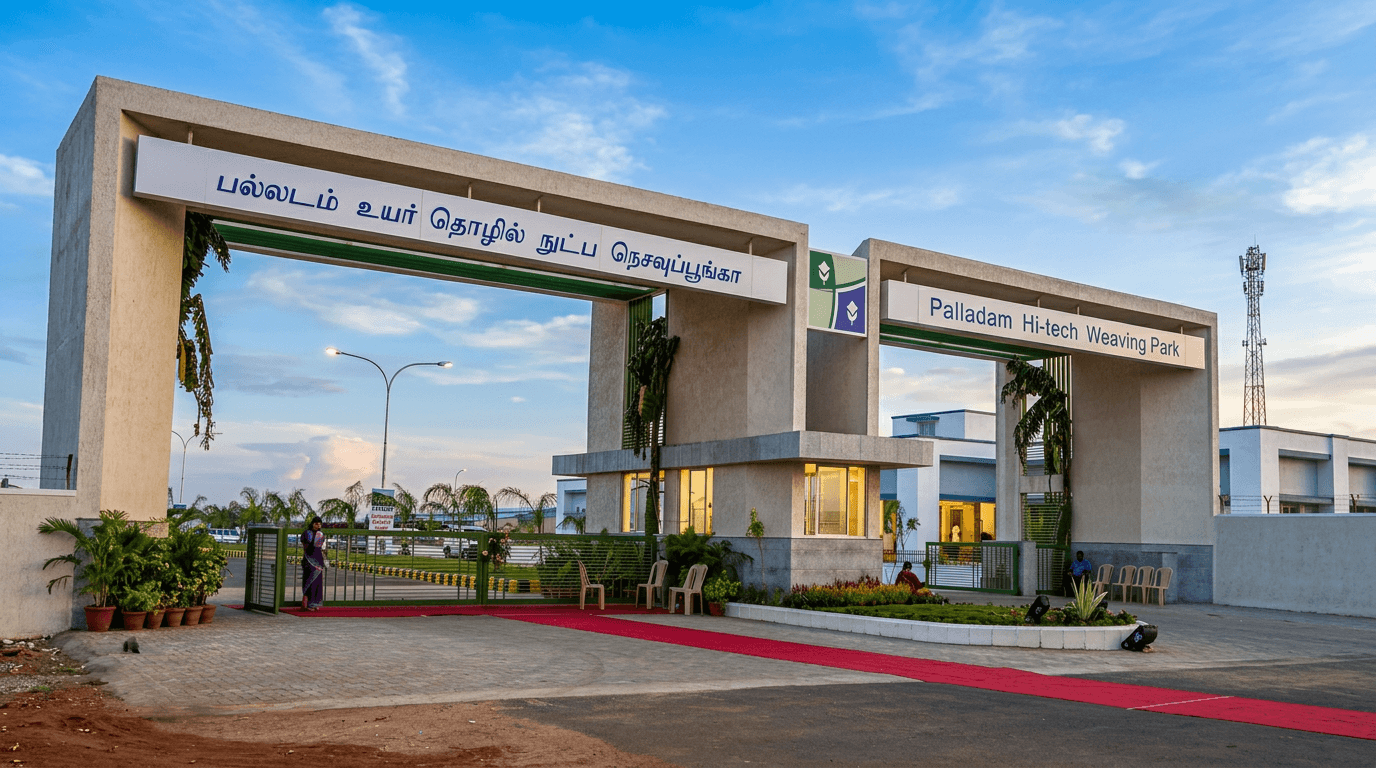
The Ministry of Textiles aimed to transform a large-scale industrial initiative into a nationally recognisable textile development ecosystem, capable of connecting infrastructure, regional identity and economic ambition through design.
The ambition was to create a scalable cluster branding system that reinforces India’s position as a global textile and manufacturing hub, while supporting long-term visibility and differentiation across 30 textile parks nationwide.
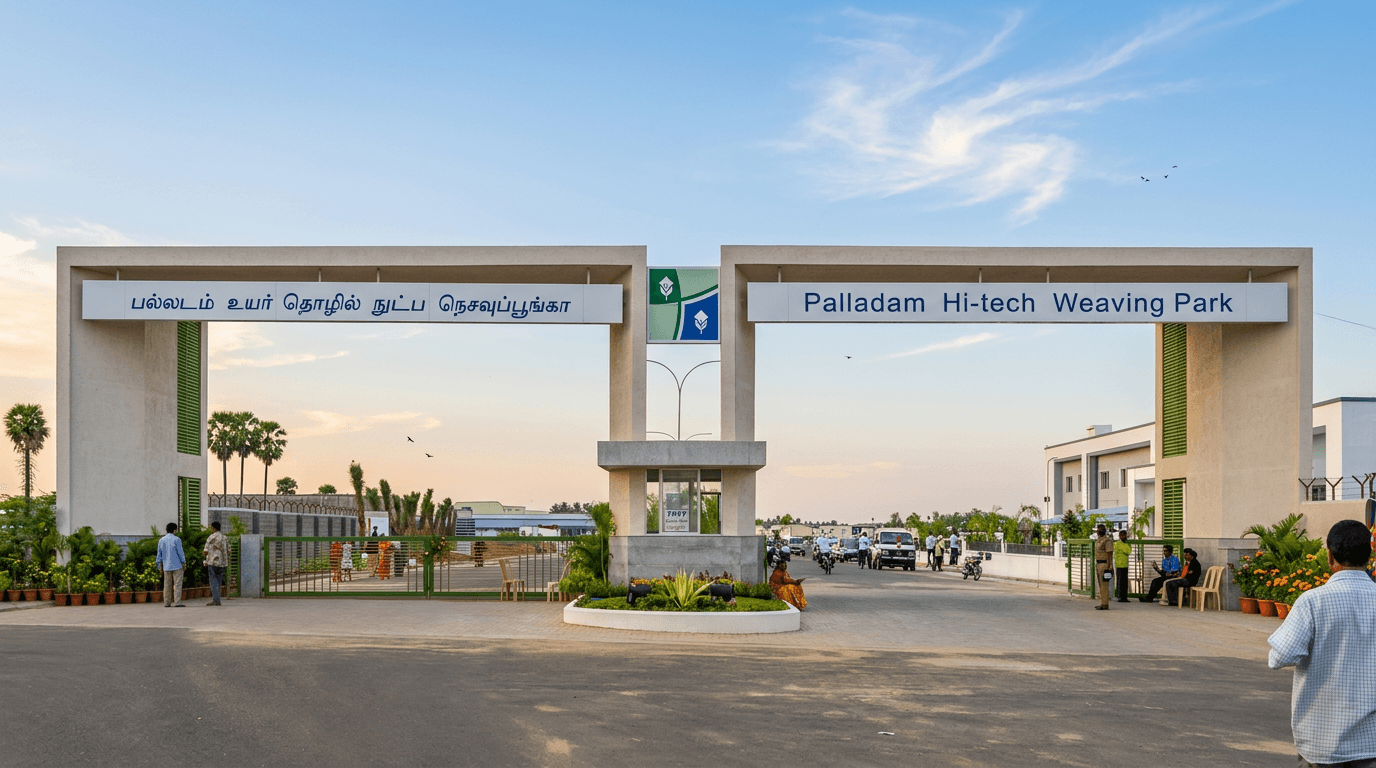
Without a unifying framework, the initiative risked appearing fragmented rather than nationally strategic.
EuMo approached the assignment as an exercise in nation-scale identity architecture and placemaking, where regional differentiation needed to coexist within a coherent national narrative.
The concept drew inspiration from the Indian quilt, where every square carries a distinct identity yet remains inseparable from the larger weave. This became the foundation for the branding strategy.
Each textile park was assigned a differentiated visual language derived from regional textile traditions, craft practices, local architecture and indigenous motifs and forms.
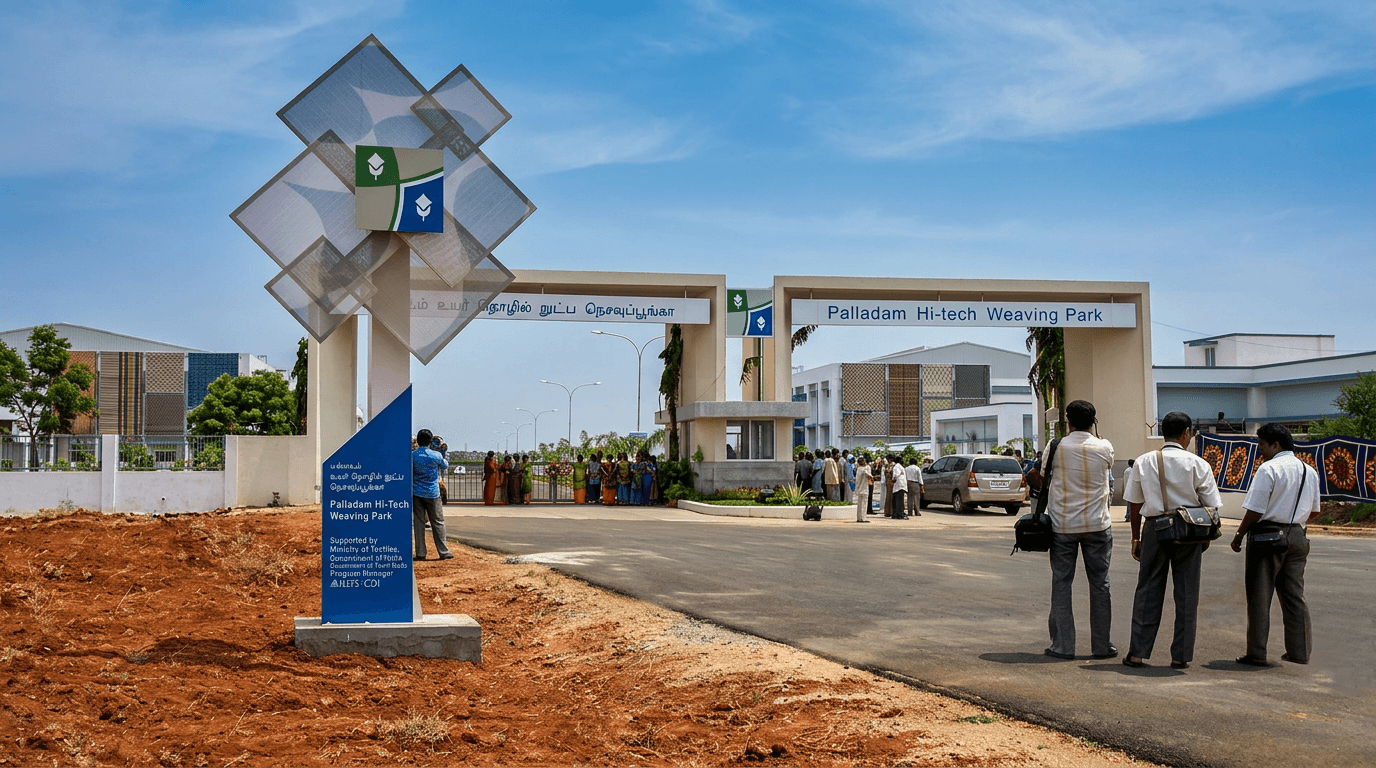
EuMo’s design team travelled extensively across India to document and research cultural references, enabling the creation of regionally rooted yet systemically connected identities.
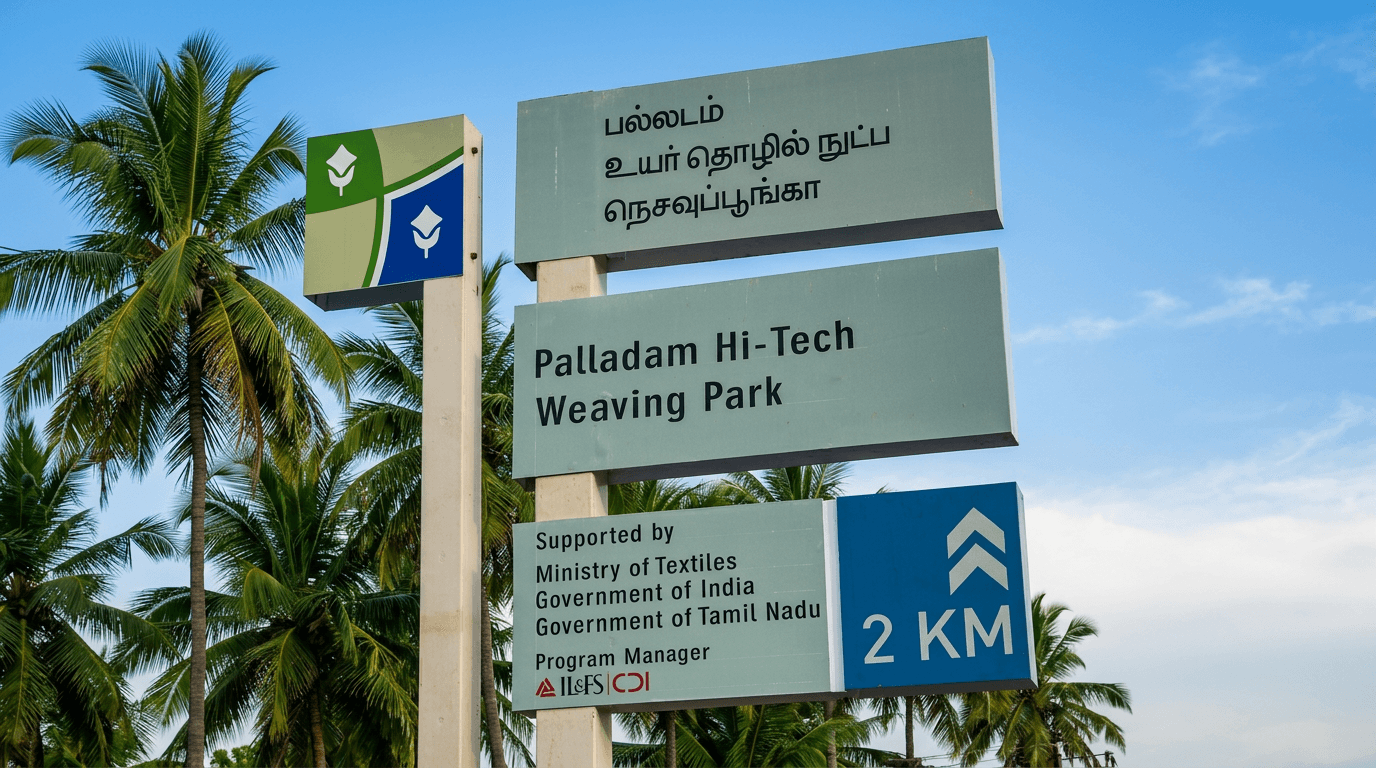
The programme extended beyond logos into a comprehensive industrial environmental branding system, including—
wayfinding systems,
environmental graphics,
signage,
park identity,
park branding guidelines.
The intervention also included strategic recommendations around monetisation and maintenance to support long-term sustainability of the branding ecosystem.

Business and Strategic Impact
Unified national textile identity: The initiative created a cohesive identity system across 30 textile parks nationwide.
Regional differentiation at scale: Each park retained its cultural and industrial distinctiveness within a common framework.
Improved visibility for textile clusters: Branding strengthened recognition and positioning of the parks within India’s textile ecosystem.
Integrated environmental branding: Signage, wayfinding and communication systems improved the overall industrial environment experience.
Scalable infrastructure communication model: The programme established a repeatable system for future industrial and cluster branding initiatives.
Why the Investment Mattered
The intervention transformed the textile parks from isolated industrial developments into a connected national ecosystem for textile growth and regional development. By creating a unified identity framework rooted in India’s cultural and craft diversity, the initiative strengthened the visibility and perception of the Government’s textile cluster programme at both national and regional levels.
The project also helped reinforce the role of textile parks in supporting employment, craft ecosystems and industrial development. As one of India’s earliest large-scale cluster branding programmes, the initiative demonstrates how strategic branding, placemaking and environmental communication systems can support nation-scale industrial development and sector positioning.