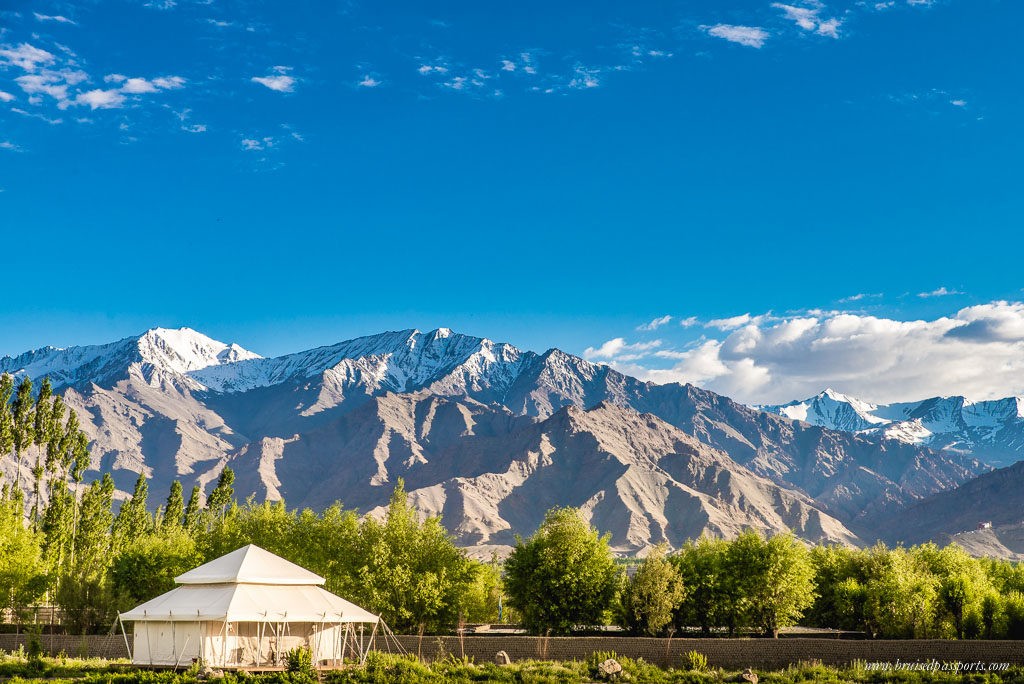
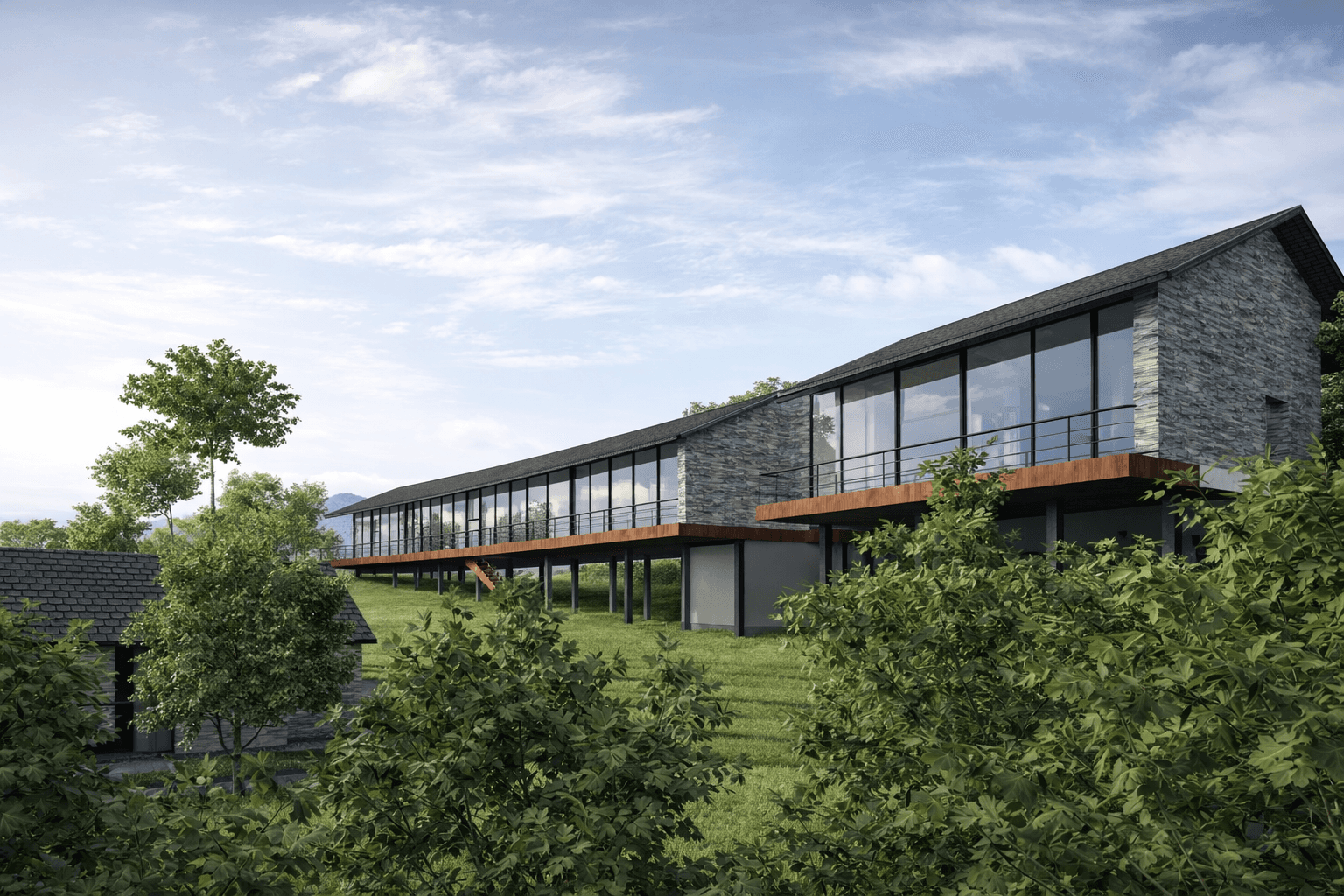
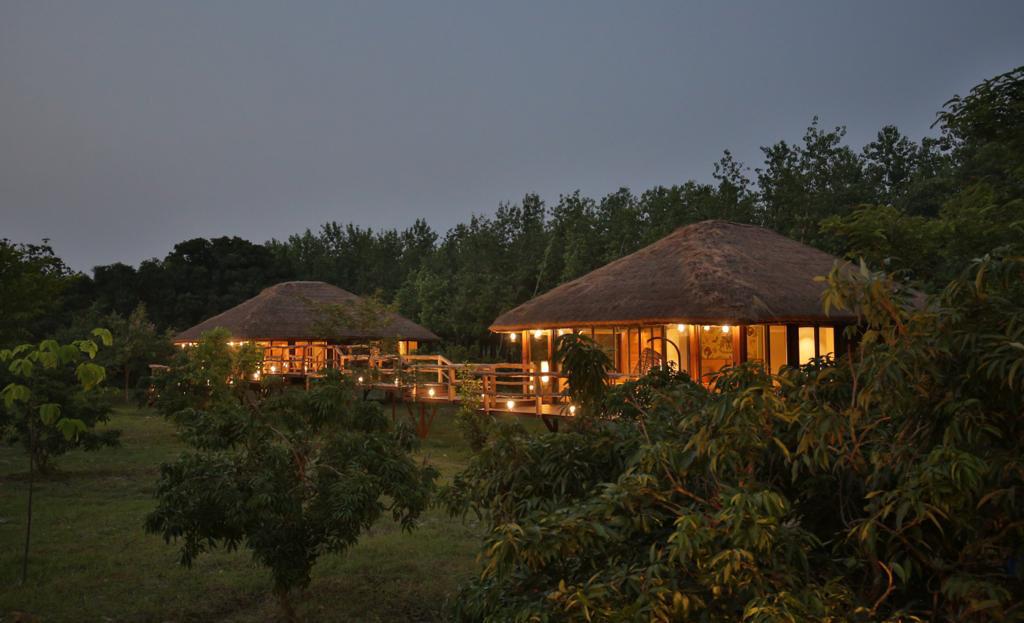
The vision behind TUTC Kishkinda Camp was to create a world-class luxury mobile camp experience amidst the dramatic boulder landscapes and temple ruins of Hampi — the historic heart of the Vijayanagara Empire.
EuMo transformed this ambition into a hospitality experience system that combined luxury travel design, sustainable architecture, mobile infrastructure and immersive destination storytelling.
TUTC - The Ultimate Travelling Camp (now an IHCL SeleQtion property)
Travel & Leisure
Luxury Tented Resort
Site Planning
Architecture
Masterplanning
Interiors
Furniture
Landscaping
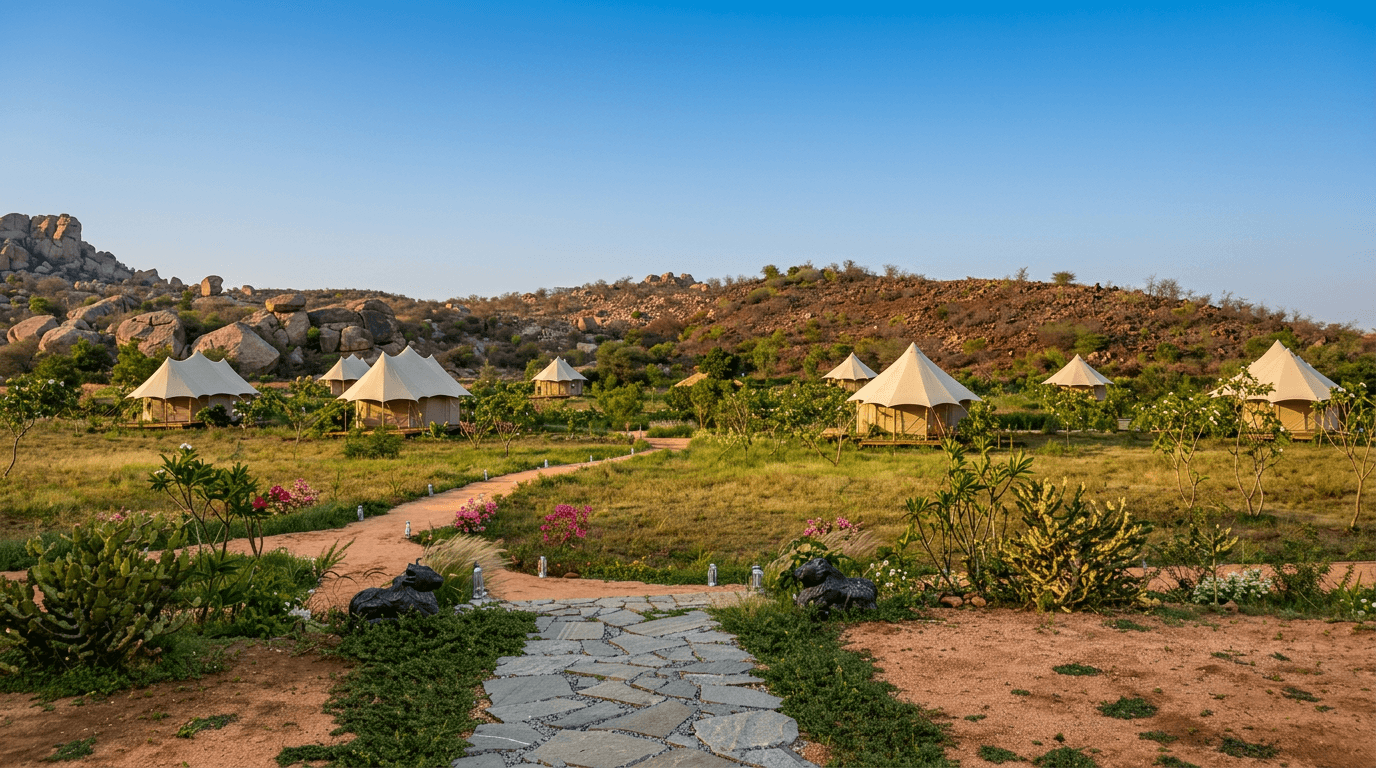
The objective was to establish a new benchmark in luxury experiential tourism through a camp that could be dismantled, transported and reassembled with minimal environmental impact while delivering uncompromising guest comfort.
The brief demanded a hospitality environment that balanced—
Luxury and operational mobility,
Ecological sensitivity and premium aesthetics,
Minimal permanent construction and high experiential value,
Brand consistency and destination authenticity.
The challenge was not only architectural, but strategic — to redefine how luxury camps could function as sustainable, transportable hospitality ecosystems
Strategic Interpretation
EuMo reframed the project from a temporary accommodation solution into a destination-led luxury experience platform.
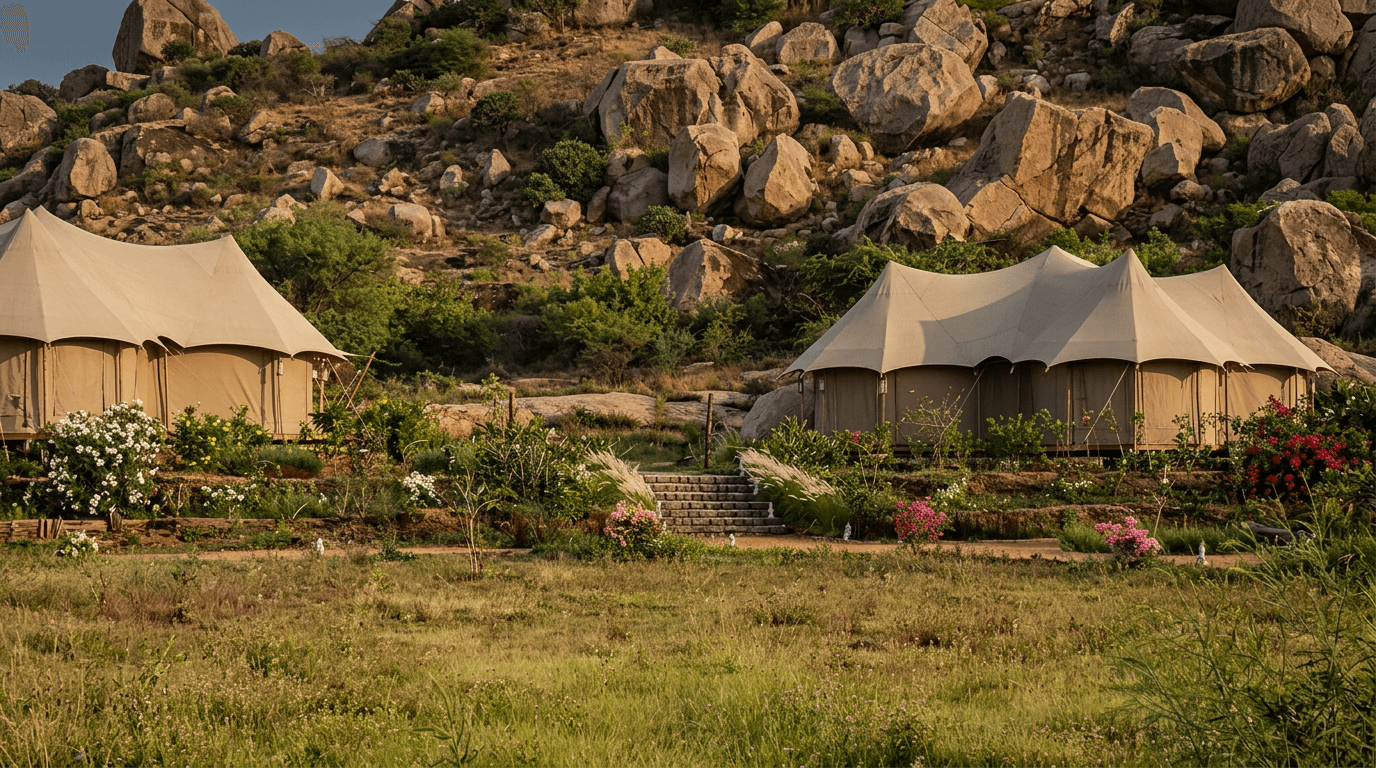
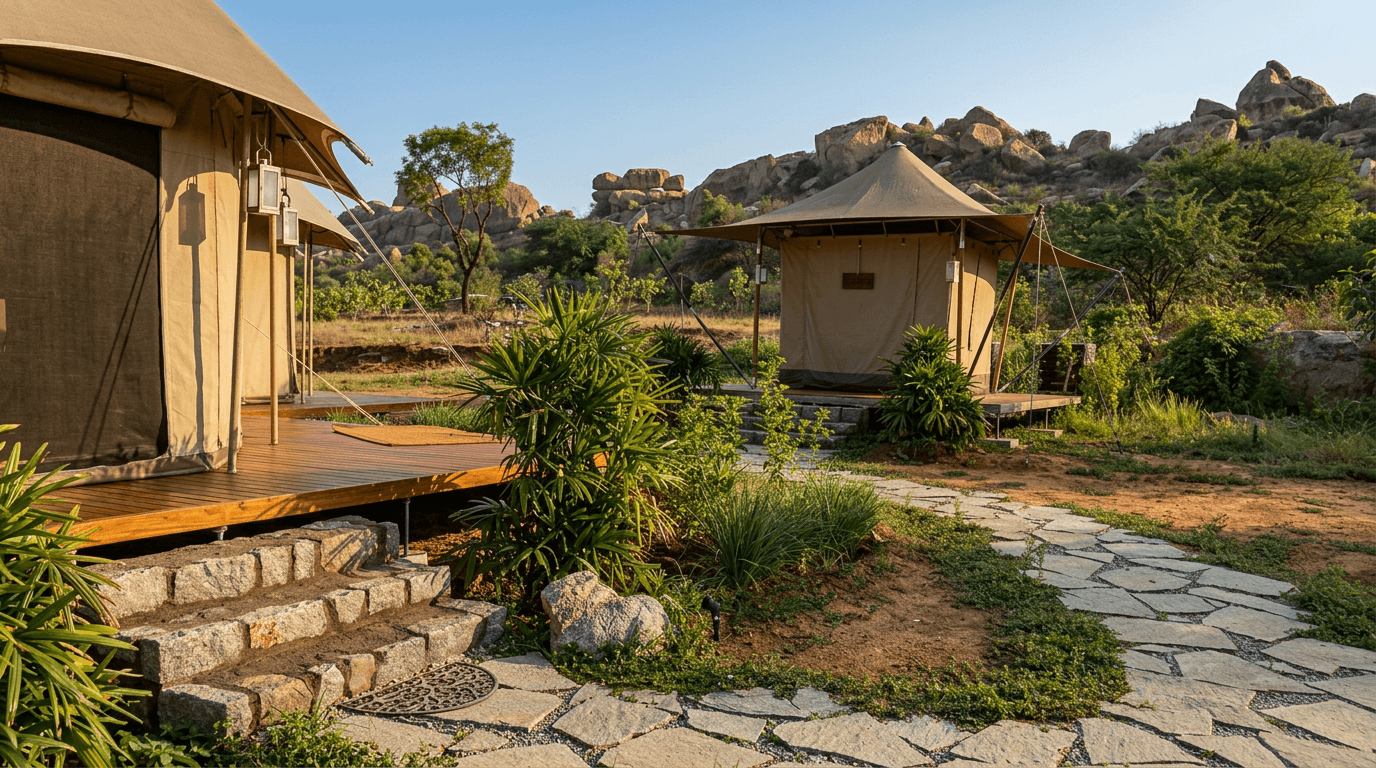
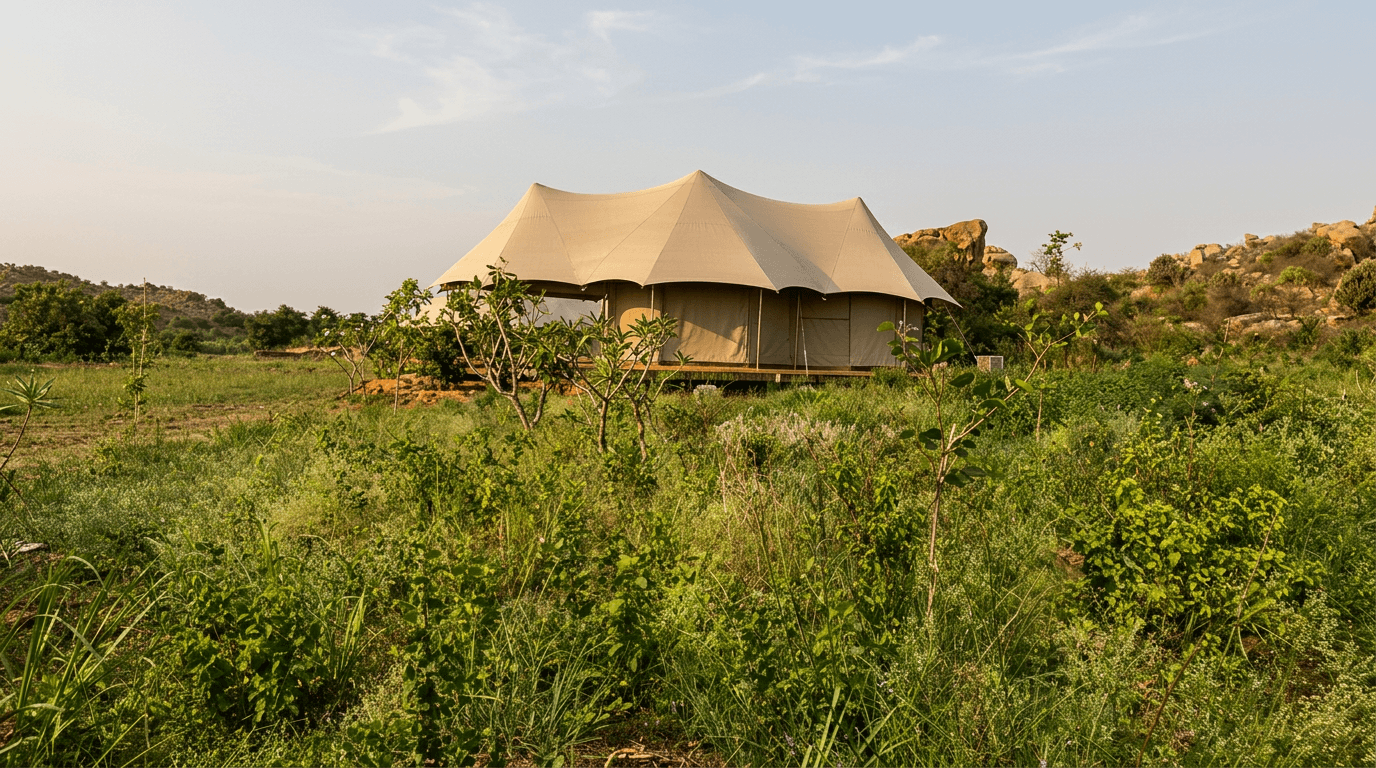
Rather than imposing a built structure onto the environment, the design language evolved from the geological and cultural identity of Hampi — its rocky hillocks, natural stream systems, temple heritage and expansive terrain.
The result was an immersive hospitality experience where architecture, interiors and guest movement remained in dialogue with the surrounding environment.
Spatial and Hospitality Design
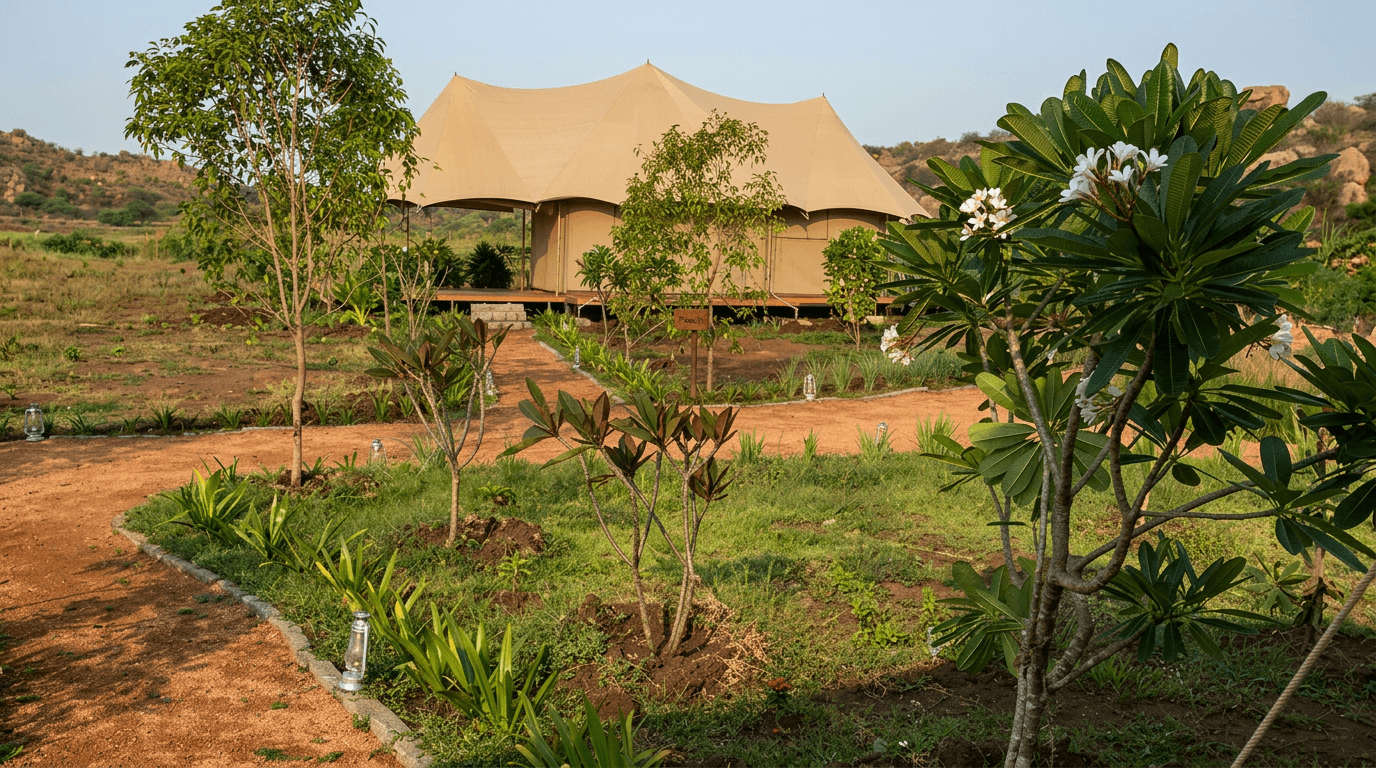
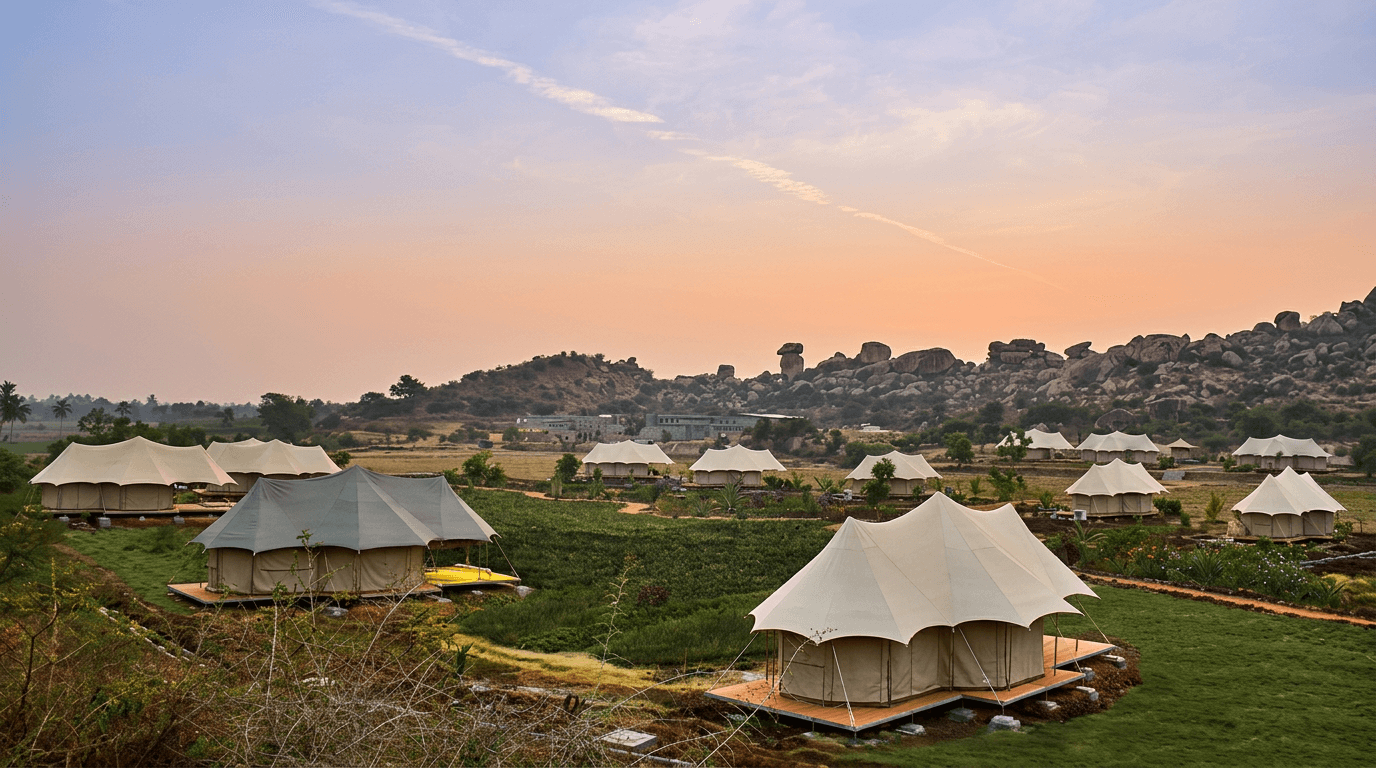
The camp was strategically planned around the site’s natural conditions.
A stream bisecting the property became an organizing feature for circulation and zoning, while the surrounding boulder formations informed orientation, visual framing and spatial hierarchy.
The design system balanced—
Lightweight and removable infrastructure,
Intuitive guest flow across the landscape,
Privacy within an open natural setting,
Seamless integration of luxury amenities within rugged terrain.
Every guest touchpoint was designed to reinforce exclusivity, comfort and immersion within nature. The landscape itself became part of the hospitality narrative.
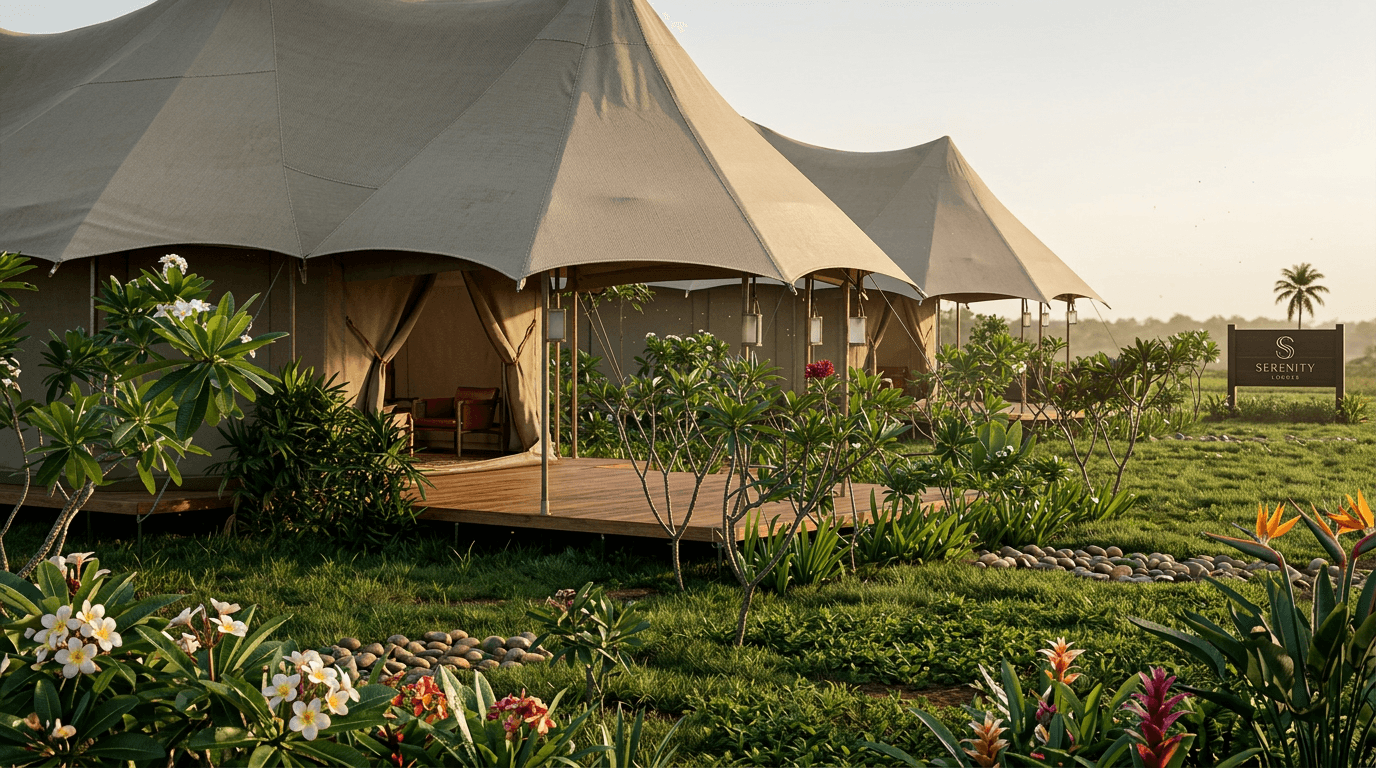
Sustainable Mobile Architecture
EuMo developed a low-impact architectural approach that prioritized reversibility and ecological stewardship.
Key interventions included—
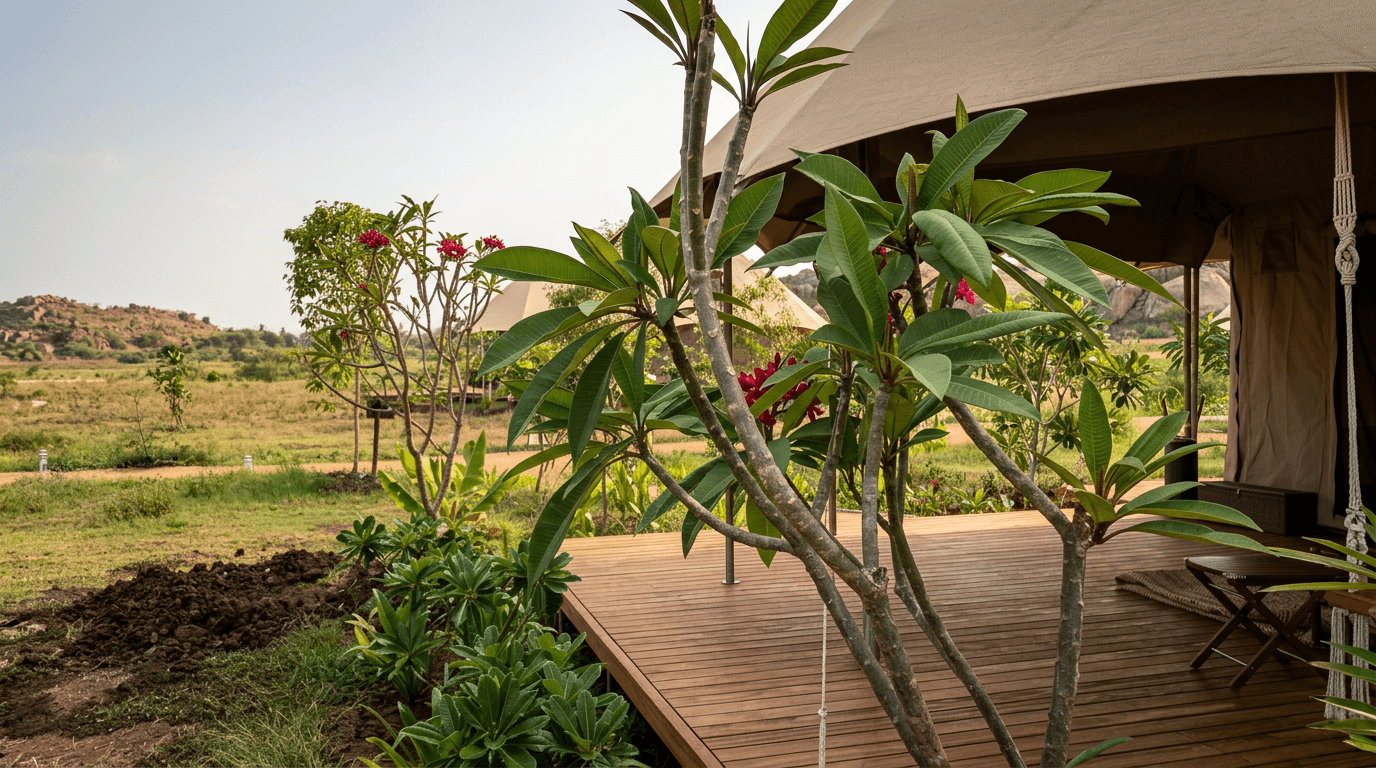
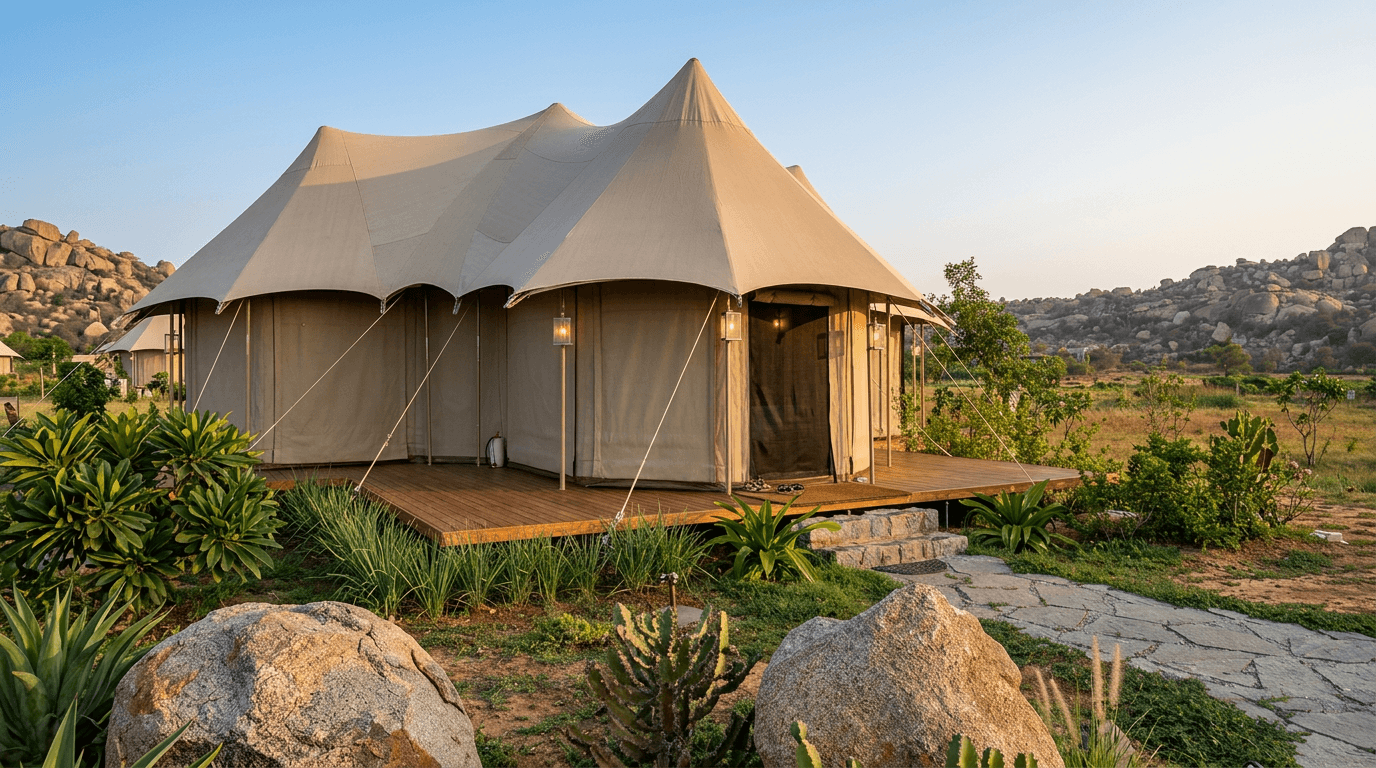
Removable tent platforms to preserve the original terrain,
Minimal civil construction across the site,
Modular systems designed for seasonal assembly and disassembly,
Infrastructure planned for efficient transport and storage.
The project demonstrated how sustainable luxury hospitality can coexist with fragile heritage and ecological zones without permanent disruption.
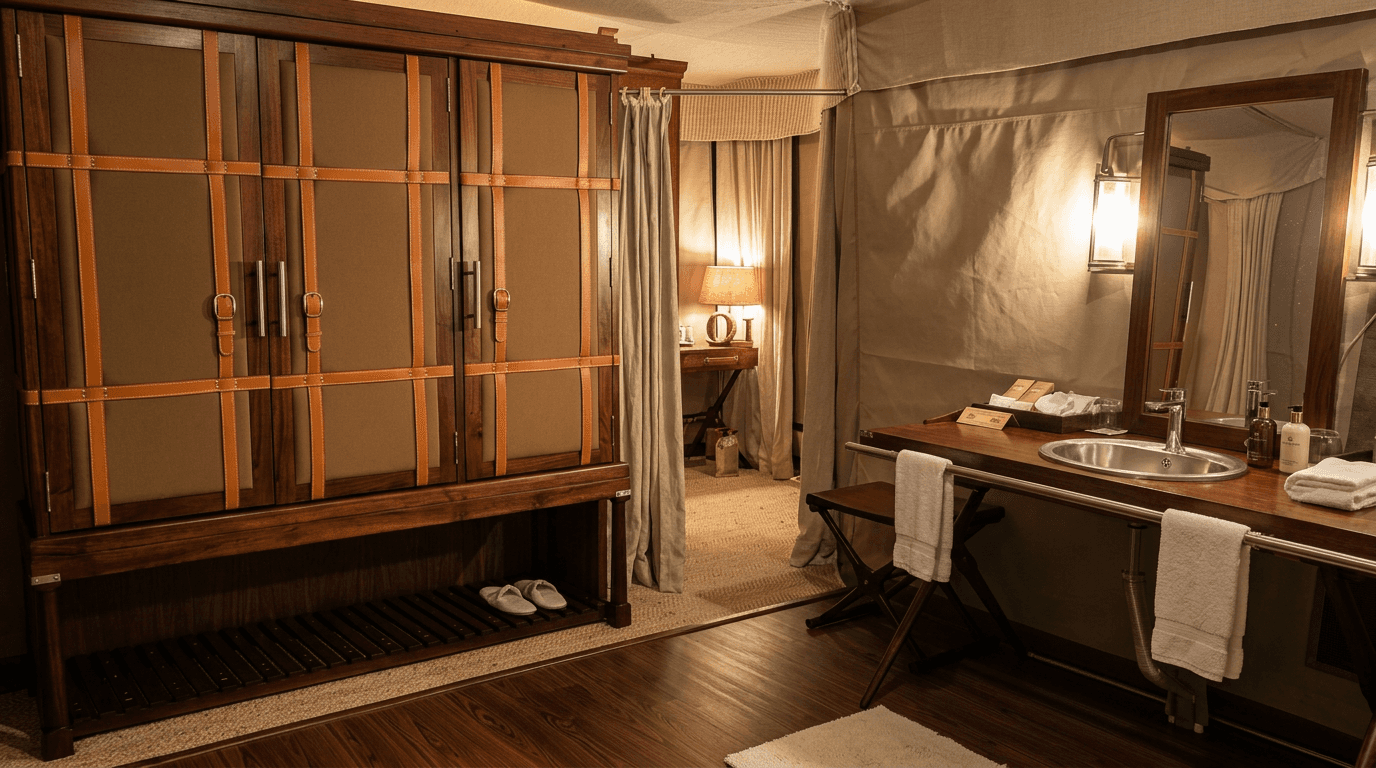
Materiality and Experience Design
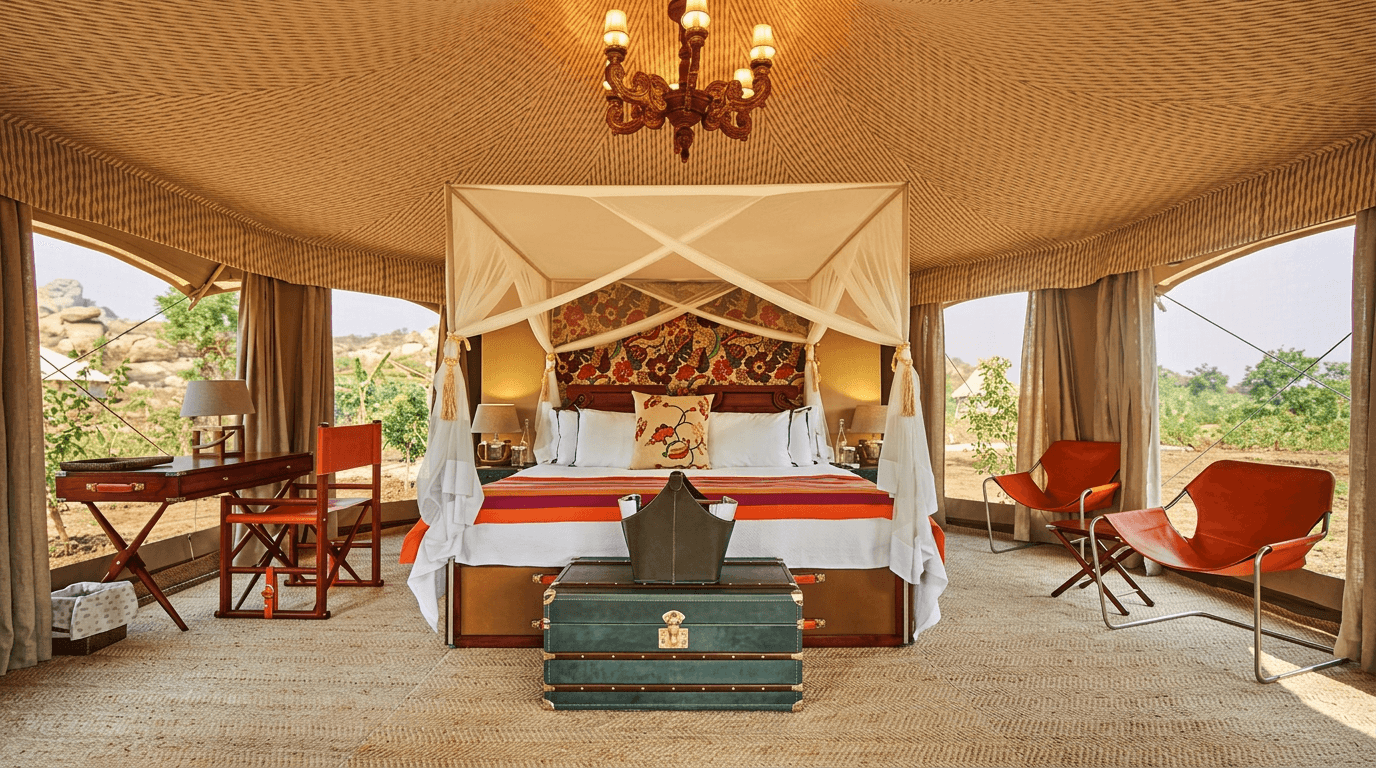
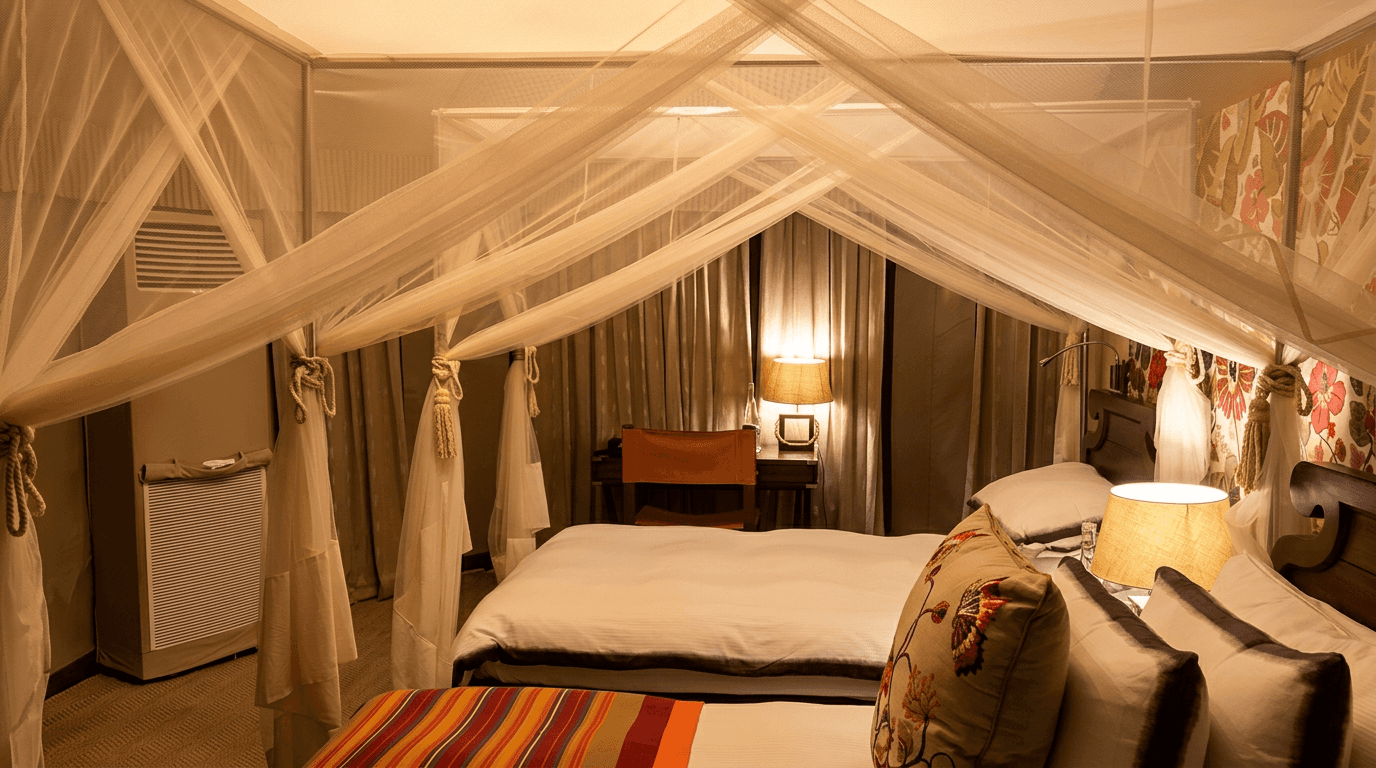
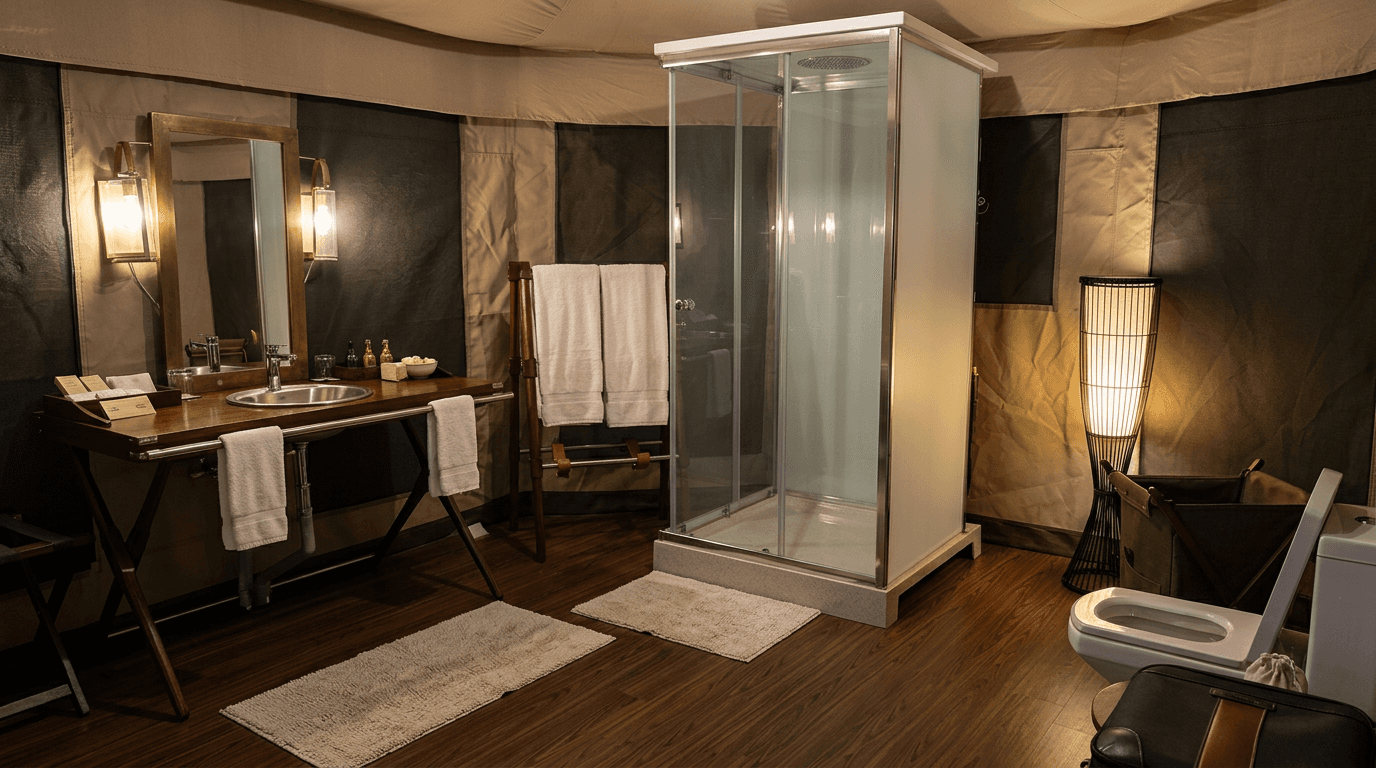
Material selection balanced durability, mobility and refined luxury.
The camp utilized—
High-quality construction systems suited for repeated transport,
Locally responsive materials where appropriate,
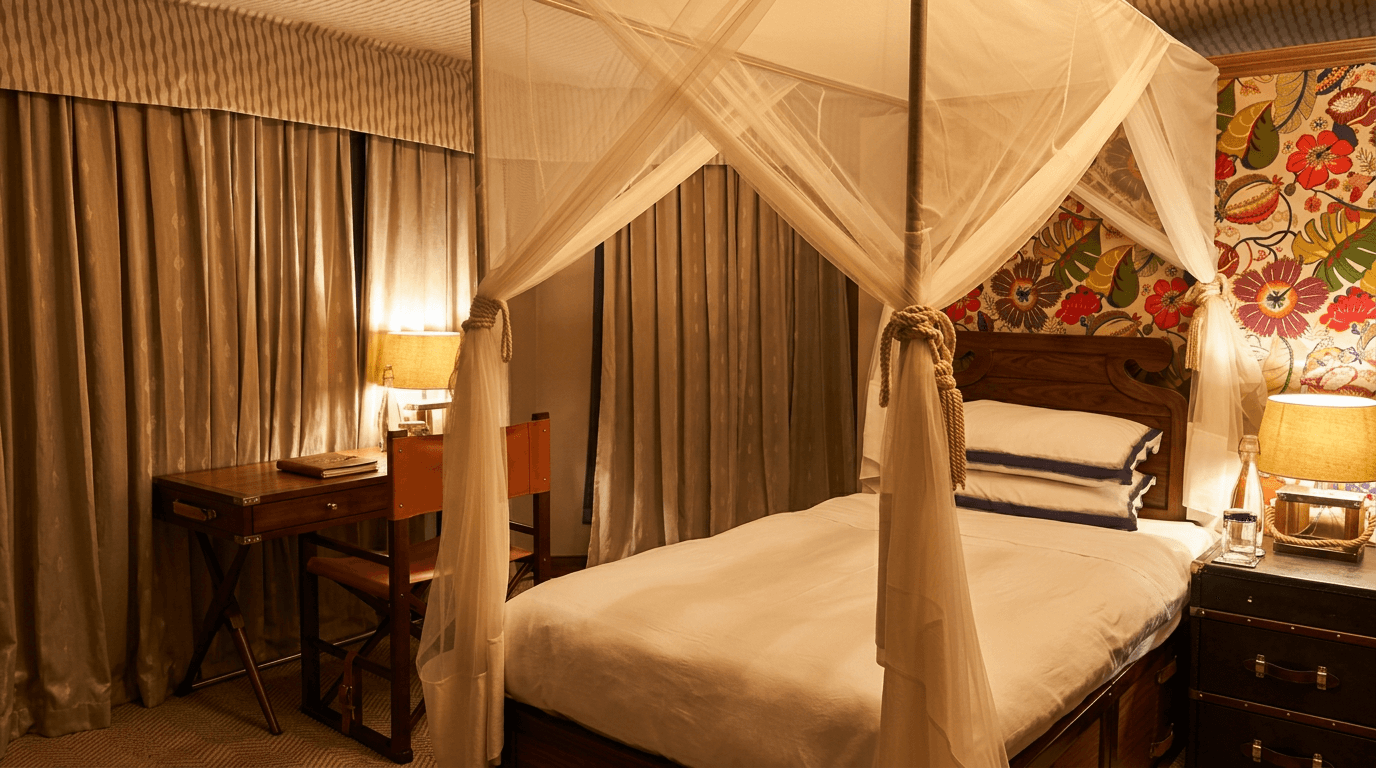
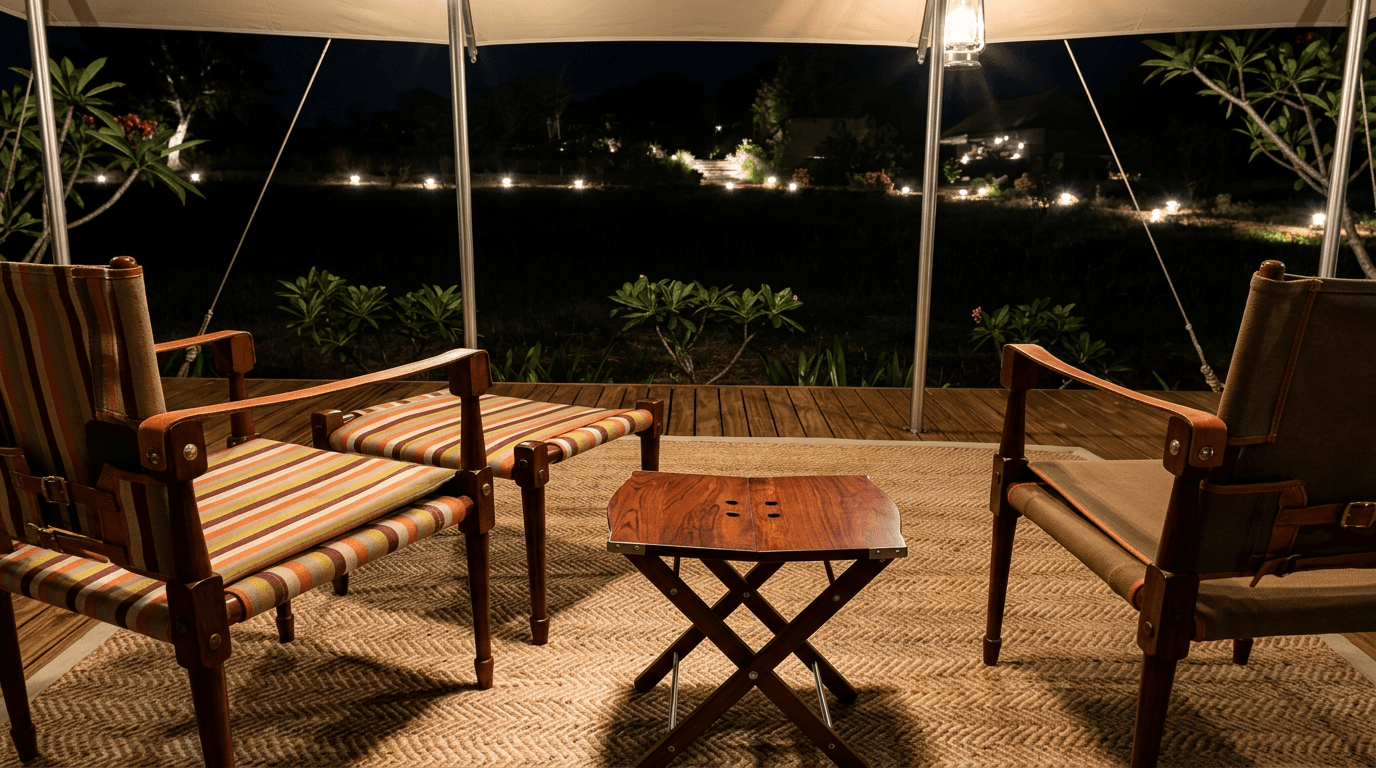
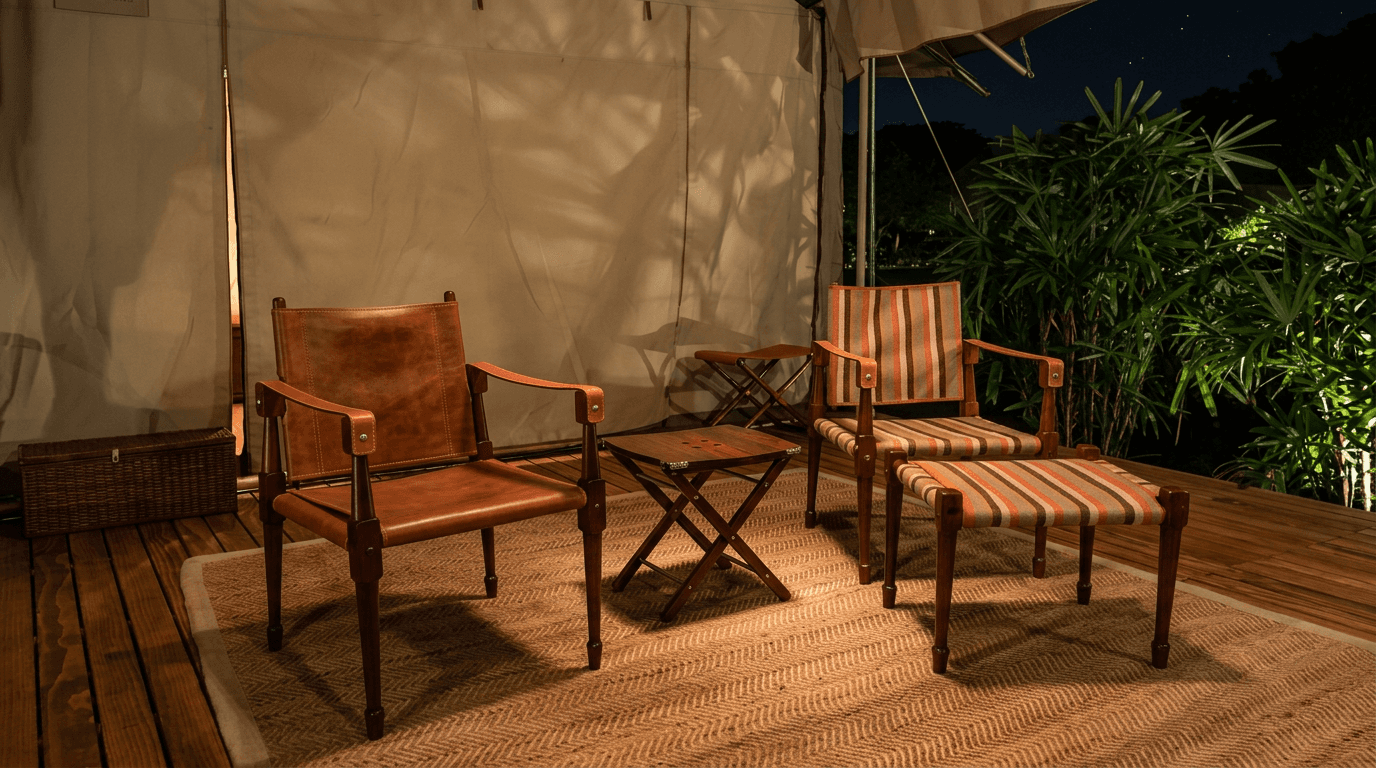
Bespoke furniture engineered for folding, dismantling and custom packaging,
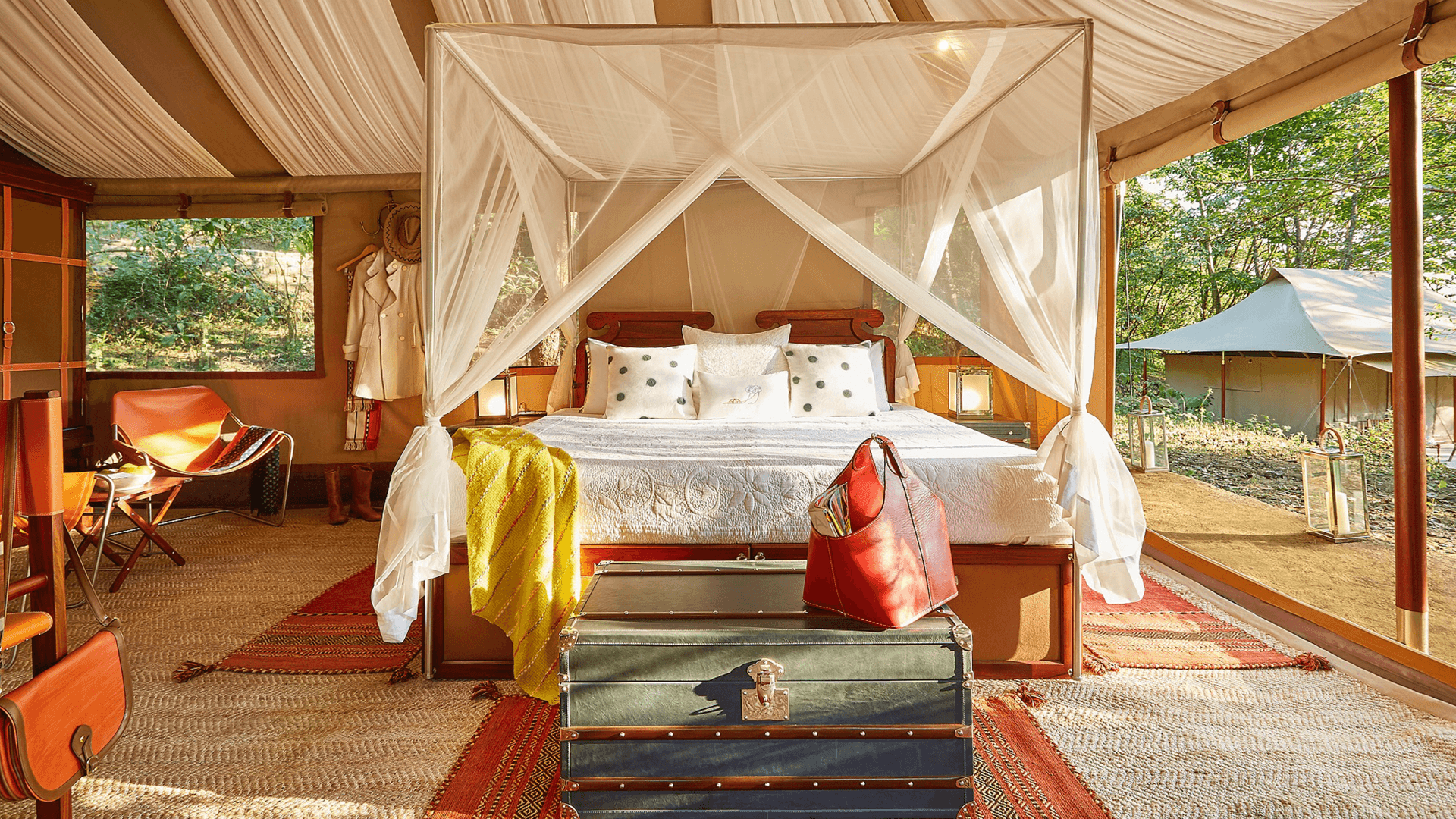
Premium detailing that elevated the guest experience beyond conventional camping.
The interiors were designed to evoke warmth, sophistication and intimacy while maintaining operational flexibility for a travelling luxury camp model.
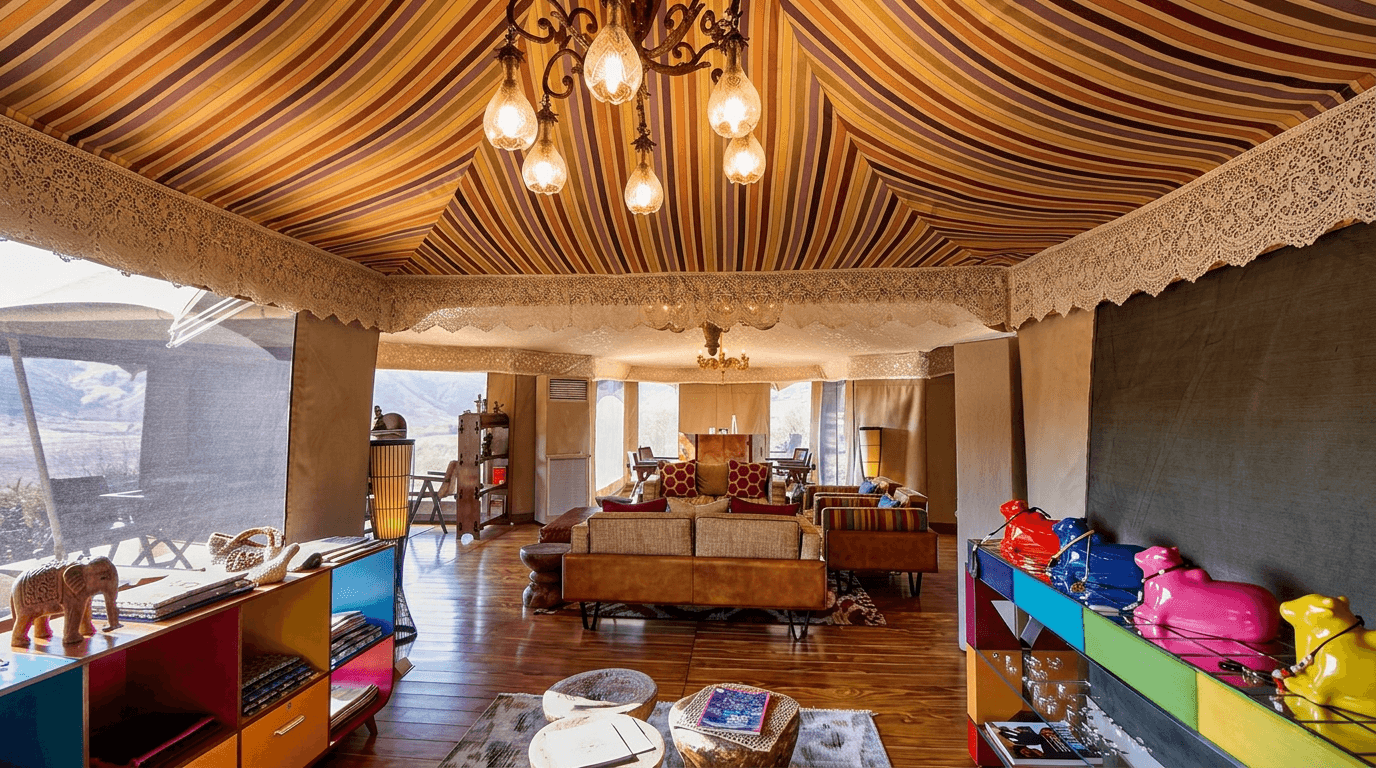
Integrated Delivery
Architecture, interiors, hospitality planning, mobility systems and experiential detailing were orchestrated as a unified design ecosystem.
This integrated approach ensured—
Brand consistency across all guest interactions,
Operational efficiency during seasonal transitions,
Long-term durability and logistical scalability,
Cohesive luxury positioning across architecture and service experience.
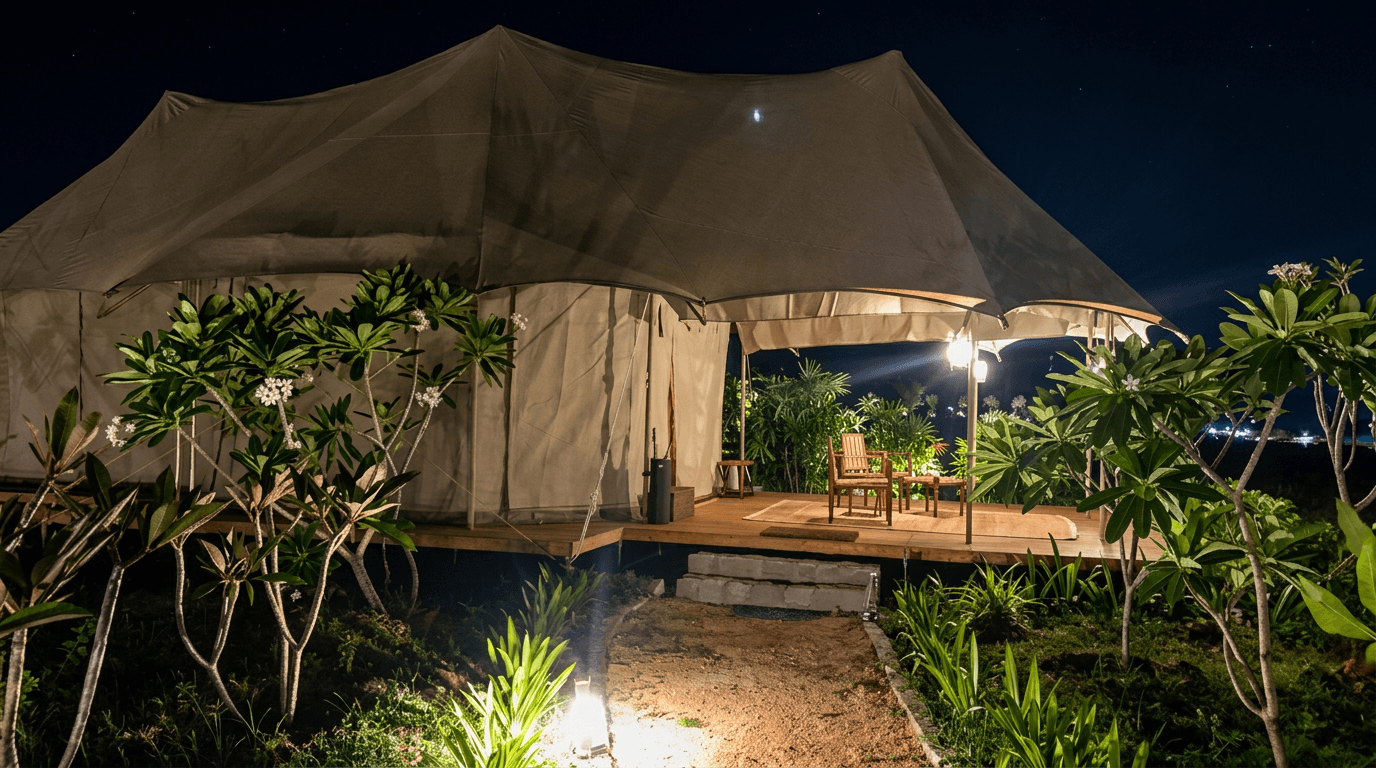
Business and Strategic Impact
Luxury hospitality repositioning:
TUTC Kishkinda Camp established itself as a benchmark in experiential luxury tourism and mobile glamping hospitality.
International recognition:
The project received acclaim for its integrated luxury offering, personalized hospitality and destination-led design approach.
Distinct market differentiation:
The camp created a category-defining hospitality experience that stood apart from conventional resorts and safari camps.
Sustainable tourism model:
The removable infrastructure strategy demonstrated how luxury tourism can operate responsibly within environmentally and culturally sensitive landscapes.
Experiential destination value:
The project elevated Hampi from a heritage destination into a globally desirable immersive luxury travel experience.
Why the Investment Mattered
TUTC Kishkinda Camp demonstrates how experiential hospitality design can create long-term brand differentiation through sustainability, mobility and emotionally immersive guest experiences.
By integrating architecture, ecological sensitivity, luxury interiors and operational adaptability into a single hospitality ecosystem, EuMo helped redefine the possibilities of luxury mobile camps in heritage and remote landscapes.
The project established a scalable model for sustainable luxury tourism, proving that temporary infrastructure can still deliver permanence in memory, brand value and guest engagement.
It also positioned the experience as more than accommodation — transforming it into a strategic hospitality asset capable of attracting discerning global travellers seeking immersive, design-led and environmentally conscious luxury experiences.