The Customer Who Already Knows
Walk into any premium direct-to-consumer store in Mumbai’s Bandra or Bengaluru’s Indiranagar on a Saturday afternoon, and you will notice something striking about the customers browsing the shelves. They are not discovering. They already know.
They have watched the reels. They have read the reviews. They have compared prices across three marketplaces, consulted a Reddit thread, and perhaps exchanged messages with a friend who bought the same product last month. By the time they push open the glass door, the sale has already been half-made somewhere else, on a smaller screen, at an earlier hour.
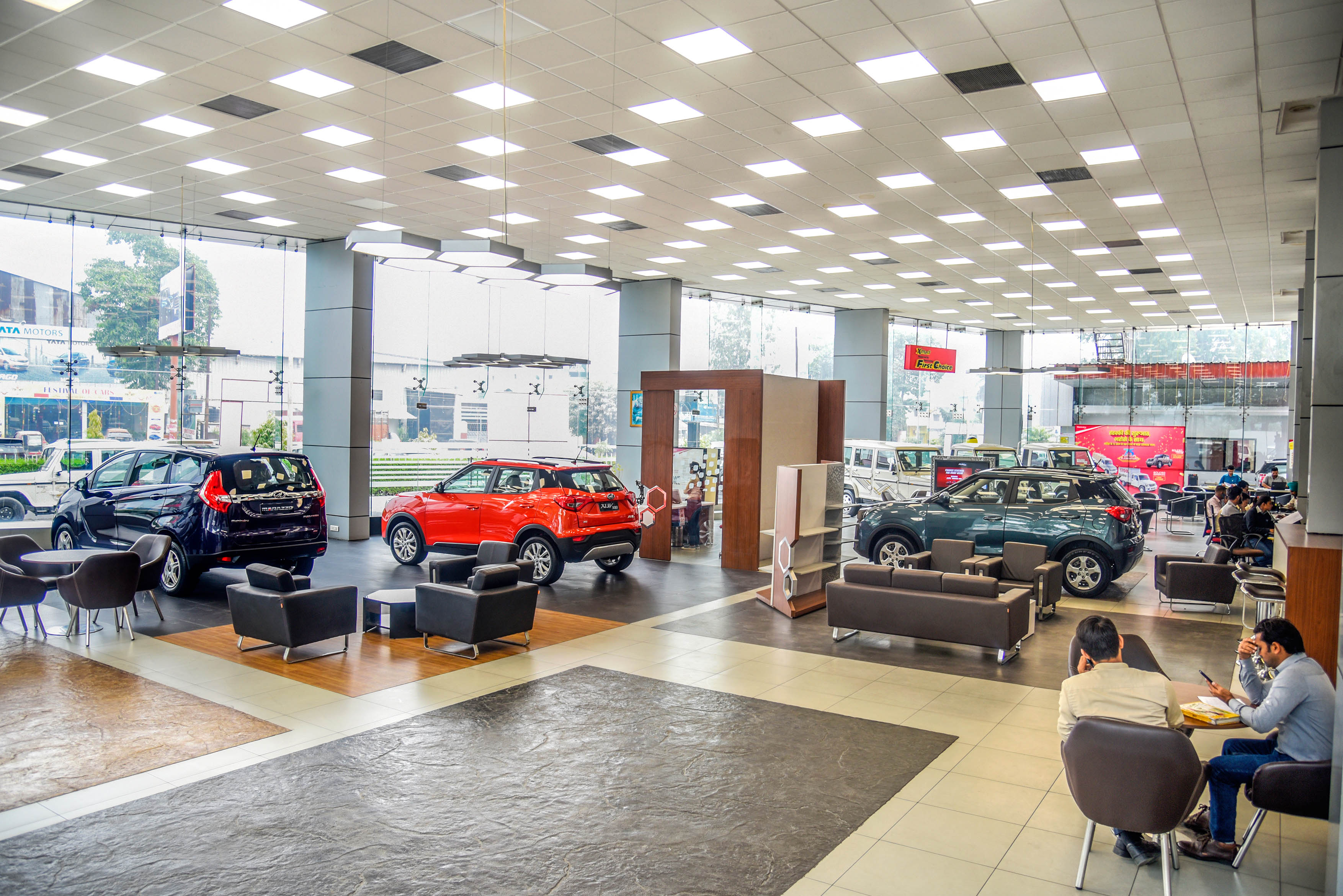
The store, in other words, is no longer the beginning of the journey. It is the continuation of one. And that changes everything about what a store is supposed to do.
Retail’s False Binary
Fifteen years ago, Indian retail was organized around a premise that turned out to be wrong: that online and offline were competing channels, each with its own logic, its own team, its own P&L, and its own idea of what the customer wanted.
E-commerce divisions and physical retail divisions grew up in separate organizational silos. They used different systems, tracked different metrics, and occasionally fought over the same customer. Brand strategy bifurcated. The result was a consumer experience that felt, at its worst, like dealing with two different companies that happened to share a logo.
But consumer behavior evolved faster than organizational structures. People did not choose between online and offline. They moved between them, fluidly, within the same purchase journey, sometimes within the same hour.
— McKinsey & Company: Omnichannel is no longer additive but foundational, with most consumer journeys beginning digitally even when transactions conclude offline.
“People did not choose between online and offline. They moved between them, fluidly, within the same purchase journey, sometimes within the same hour.”
India’s Phygital Reality
India’s urban consumer has developed a retail behavior that has no clean precedent. In the metro cities the typical purchase journey now runs something like this: discovery on Instagram, deeper research on a marketplace, in-store validation, and repurchase through a brand app.
This pattern repeats across categories such as beauty, fashion, electronics, home furnishings, wellness etc. Each category has its own version of the journey, its own mix of channels, its own critical moments of trust. But the underlying logic is consistent: no single channel owns the customer.
Indian retail observers have termed this “phygital.” A blend of physical and digital that, for all its inelegance as a word, accurately describes the texture of modern Indian shopping.
— PwC India: Consumers increasingly prioritize convenience, service-led experiences, and seamless movement between channels when evaluating brands.
The New Function of the Physical Store
If the store is no longer where discovery happens, what is it for?
The answer that India’s most thoughtful D2C brands are arriving at is this: the store is for trust. For touch. For consultation. For the kind of emotional confirmation that a product image on a five-inch screen cannot provide. For the community that forms around a brand when it occupies a real space in a real neighborhood.
This is why D2C brands that built themselves entirely on digital infrastructure are now aggressively opening stores. Not because e-commerce has stopped working, but because they have realized that physical presence and digital presence are not alternatives. They are amplifiers of each other.
— Indian D2C data: Brands sharply increasing physical retail presence as omnichannel strategy becomes central to long-term growth.
Continuity as Design
The real challenge is not about being present across channels. Most ambitious brands have figured out the presence part. The harder problem is coherence, ensuring that a customer’s experience of the brand feels consistent, continuous, and cumulative regardless of where they encounter it.
A customer who browsed a brand’s website on Tuesday, watched its founder’s interview on Wednesday, and walked into its store on Saturday expects the brand to be, on some level, aware of who they are. They expect the tone to be the same. They expect the product information to match. They expect that if they ask a question online, they will not have to ask it again in person.
Meeting these expectations requires not just technology integration but something more fundamental: the decision to treat the customer’s journey as a single continuous experience, rather than a series of separate channel interactions.
Sequence: How Modern Retail Journeys Actually Unfold
There is a reason the order matters. Social discovery creates one kind of awareness which is ambient, aesthetic, and associative. Digital validation deepens it with information, comparison, and peer credibility. Physical confirmation adds the sensory and emotional dimensions that no screen can replicate. App-enabled retention converts a one-time buyer into a relationship.
Each stage prepares the customer for the next. Each channel, in a well-designed omnichannel system, hands the customer forward with context intact. The best brands have begun to think of this not as a funnel but as a relay where each stage is passing the customer to the next without dropping what came before.
— McKinsey: Online channels increasingly function as the originating touchpoint for retail interaction, even for purchases that close in-store.
The Store as Interface
Walk into a well-designed omnichannel store today and the technology is, by design, nearly invisible. QR codes embedded in shelf displays pull up detailed product stories. Assisted commerce terminals let staff surface inventory across the entire network. Loyalty programs connect in-store behavior to digital profiles in real time.
The best implementations share a quality: they feel less like technology and more like service. The QR code does not announce itself as innovation. It simply answers the question the customer was already forming.
— PwC India: AI-enabled personalization, endless aisle systems, and integrated inventory visibility are the emerging operational priorities for omnichannel retailers.
Human Friction, Human Trust
And yet, for all the sophistication of these systems, the most important person in an omnichannel store is still a human being standing on the floor.
In high-consideration categories (skincare, jewelry, furniture, and apparel) the staff member is an interpreter of the brand ecosystem and not merely a transactional intermediary. They are an interpreter of the brand ecosystem. They translate digital research into physical recommendation. They provide the emotional validation that no algorithm has yet learned to replicate. They make the customer feel seen, rather than targeted.
— PwC India: Indian shoppers increasingly expect knowledgeable in-store staff and service-oriented physical experiences as a core part of the brand relationship.
What Most Brands Still Get Wrong
Despite the volume of strategic attention paid to omnichannel over the last several years, most brands have not yet solved it. They have announced it. They have hired for it. They have included it in board presentations. But operationally, the gaps remain wide.
Inventory systems that do not communicate across channels. Pricing that diverges between online and offline. Customer service teams with no visibility into a shopper’s previous interactions. Loyalty points that accumulate in silos. These are not minor technical inconveniences. They are ruptures in the customer’s sense that the brand knows them.
The deeper problem is organizational. Channel conflict, the tension between online and offline teams over attribution, incentives, and turf is not a technology problem. It is a structural one. And it will not be solved by a new platform.
— McKinsey: Few retailers have genuinely integrated omnichannel operations, despite broad rhetorical prioritization of the concept.
Designing the Gap Away
Some practitioners are now approaching omnichannel as an experience architecture problem. The question they are asking is not “how do we connect our channels?” but “how do we design an experience in which the channel boundaries become invisible to the customer?”
This reframing shifts the design brief from IT to brand strategy, from system architecture to spatial design, from CRM to customer experience orchestration. Five dimensions together constitute a framework for building experiences that cohere across touchpoints:
Intent- Clarity of purpose built structurally into every touchpoint.
Sequence - Deliberate ordering of how a customer moves through the experience.
Narrative - A story centered on the visitor, not the brand.
Medium - Technology that serves the story without becoming the spectacle.
Human Interface - Staff who act as brand interpreters, not salespeople.
The Future of Indian Retail
In the metros where India’s consumer economy is being built in real time, the distinction between online and offline retail is already collapsing. Not because physical stores are disappearing (they are not) but because the most capable brands have stopped thinking of the two as separate things.
The winning brands of the next decade will be the ones that make channels disappear, whose customers move from a social post to a store to an app and back again without ever feeling a seam.
That is a harder thing to build than a website or a store. It requires clarity of purpose, discipline of design, and an organizational commitment to treating the customer’s experience as a single continuous thing, regardless of where it happens.
The brands that get there first will not just sell more. They will be trusted more. And in the attention economy India is becoming, trust is the scarcest resource of all.