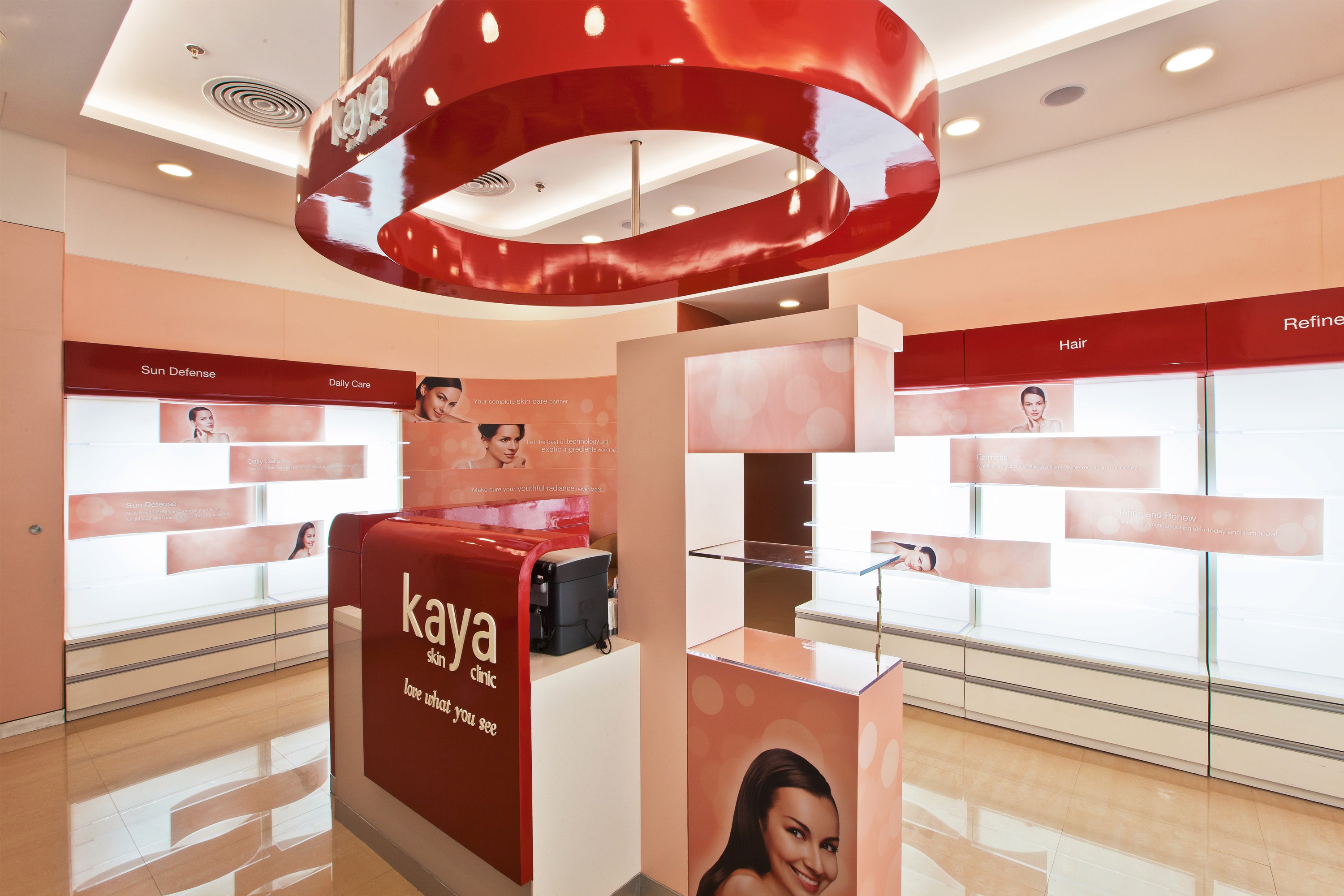
She enters the store with purpose. That much is visible. She moves quickly through the first aisle, slows at a display of ceramic cookware, picks up a pot, reads the underside, replaces it. She moves to the next display. She returns. She picks up the pot again. She reads the underside again. She puts it down. She leaves without buying anything.
In the language of modern retail analytics, what just happened is simple: a non-conversion. A body passed through a space and failed to exchange money. The footfall counter registered her entry. The heat map recorded her dwell time near the cookware. The conversion funnel noted her as lost. The dashboard moved on.
But something more interesting happened in that store. A real human being stood at a real decision threshold and flinched. Not because she lacked interest. Not because the product failed her. But because the environment failed to give her what she needed to feel certain.
She left not due to indifference. She left because the cost of deciding felt too high.
"Retail analytics has confused movement with meaning and presence with intent."
Retail Has Mistaken Activity for Intent
Modern retail has never been better at measuring itself. Traffic sensors count every entry. Digital signage tracks eye contact. Point-of-sale systems log every transaction. Loyalty programmes build longitudinal profiles of what customers choose, every item, every visit, every return.
And yet, conversion rates at physical retail have remained stubbornly flat for over a decade. Globally, most brick-and-mortar stores convert somewhere between 20 and 40 percent of visitors. The majority of people who enter, leave without buying. Retail has responded to this problem by collecting more data and asked less interesting questions about what that data actually means.
The fundamental problem is this: retail metrics measure outcomes. They cannot measure the experience that precedes outcomes. A dwell-time spike near a display looks identical whether the customer was deeply engaged or utterly confused. A long browsing session looks the same whether the shopper was excited or paralysed. The funnel cannot distinguish curiosity from hesitation. It cannot detect the moment a person decides that the effort of buying has exceeded the benefit of owning.
Retail analytics sees movement. It struggles to interpret cognition.
Behavioural Mapping: Reading Decisions Instead of Outcomes
A growing number of researchers, service designers and retail consultants are working in a different tradition. They call it behavioural mapping. Its purpose is not to record what customers did, but to reconstruct what they were trying to decide and what prevented them from deciding it.
The framework is deceptively simple. For any moment of friction in a retail environment, it asks five questions:
What action was available to the customer?
What conditions shaped how they interpreted the situation?
What physical or psychological resistance emerged?
How could that friction have been reduced?
And (critically) how do we verify that our interpretation is accurate?
Behavioural mapping sits at the intersection of several disciplines that retail has been slow to absorb: applied behavioural science, environmental psychology, decision architecture and service design. It borrows from the work of Daniel Kahneman on cognitive effort, from the environmental research of Roger Ulrich on how physical spaces affect emotional states and from the design methodologies of firms like IDEO, which spent decades learning that what people say about their behaviour and what they actually do are reliably, systematically different.
Where analytics asks what happened, behavioural mapping asks why it almost didn't.
"The shopper did not leave because she lacked desire. She left because desire was not enough."
The Five Invisible Frictions
Behavioral mapping has identified a recurring set of psychological obstacles that suppress retail conversion not through any fault in the product or the price, but through the cumulative weight of the decision environment itself.
Ambiguity
The first is ambiguity: the state in which a customer does not know what they are supposed to do next. Ambiguity is not confusion about a product. It is uncertainty about the rules of a space. May I touch this? Is this for display? Should I find a staff member? Is this section relevant to me? Ambiguity consumes cognitive energy before a single product evaluation has occurred. In environments where it is high, customers often retreat not because they have decided against buying but because the effort of navigating the space has already exhausted their decisional resources.
Cognitive Exhaustion
The second friction is cognitive exhaustion. Choice is metabolically expensive. Every comparison a shopper makes, every price differential evaluated, every material quality assessed, every specification read, draws on a finite cognitive budget. Retail design has largely responded to the problem of competition by adding more: more products, more comparisons, more options, more promotional information. Behavioral science suggests this response is precisely backwards.
When the interpretive labour of a purchase exceeds the perceived value of the item, the easiest decision is to leave.
Social Pressure
The third friction is social. Retail spaces are public spaces and the presence of other people like staff, other shoppers, companions substantially changes how individuals make decisions. Staff proximity produces anxiety in customers who are not yet ready to commit, triggering what behavioural economists call premature closure: the rush to a decision (or an exit) driven not by resolution but by social discomfort. Crowding compresses exploration. The fear of appearing uninformed, indecisive, or unable to afford something shapes behaviour in ways that no transaction record will ever capture.
Loss Aversion
The fourth friction is perhaps the most powerful: loss aversion. The psychological pain of a wrong purchase (of financial regret, of buyer's remorse, of commitment to something that might disappoint) is consistently valued at roughly twice the pleasure of a correct one. In retail environments that offer insufficient information, insufficient trust signals, or insufficient return reassurance, loss aversion overwhelms desire. The customer does not think, “I want this.” She thinks,“But what if I am wrong?”
Identity Misalignment
The fifth friction is the most subtle and the least discussed: the feeling that a store was not designed for people like me. Identity misalignment operates below the threshold of conscious articulation. It is the slight unease of a customer who feels aesthetically out of place, demographically unrepresented, or socioeconomically misjudged by a retail environment. It rarely produces a complaint. It simply produces an exit.
The Failure of Retail's Design Logic
There is an orthodoxy in retail design and it rests on a straightforward premise: more visibility equals more sales. Pack the shelves densely. Maximise promotional messaging. Rotate featured products frequently. Create visual energy. The more a customer sees, the more a customer wants.
Behavioral mapping consistently reveals the opposite. In high-density retail environments which are characterised by crowded shelves, abundant signage, overlapping promotions and relentless visual stimulation tend to increase cognitive load, decision confidence decreases and the probability of purchase falls. Customers do not become more decisive in these environments. They become less so. The paradox of choice, identified by psychologist Barry Schwartz two decades ago, remains stubbornly underbuilt into retail strategy.
This is not an argument for minimalism as aesthetic preference. It is an argument that the primary role of retail design is not to maximise the quantity of things a customer perceives, but to maximise the confidence with which a customer can make a decision. Those are very different design briefs and they tend to produce very different spaces.
India and the Complexity of Collective Decision-Making
Any serious analysis of retail psychology must account for the fact that shopping is not a universal individual act. In India and across much of South and Southeast Asia the purchase decision is frequently a social negotiation.
The Indian retail context brings dynamics that Western behavioural models were not designed to capture. Family members shop together and their preferences do not simply aggregate, they interact, defer, conflict and resolve through rituals of consultation that may bear no visible resemblance to the actual internal deliberation occurring. A mother and daughter examining a sari are not two independent decision-makers. An elderly couple at a home appliance store are not simply sharing information. The hesitation of one affects the confidence of the other. The social dynamics of the group (who has status, who has veto power, who is trying to please whom) shape the ultimate outcome far more than any individual's product evaluation.
Indian retail also carries the weight of public negotiation. Price is frequently not fixed or even when it is, customers are uncertain whether it ought to be. This uncertainty introduces a layer of transactional friction that exists before product evaluation even begins. Standard analytics cannot capture group hesitation. It cannot record validation rituals, social deference, or the specific moment when a family group reaches collective uncertainty and begins to move toward the exit.
Behavioural mapping, with its emphasis on observation rather than transaction data is exceptionally well-positioned to illuminate dynamics like these. But it requires patience to watch, not just measure.
"In India, the shopping unit is rarely an individual. It is a relationship."
Observation Over Declaration: Why Watching Matters More Than Asking
There is a foundational problem with how retailers currently gather insight: they ask. Exit surveys, focus groups, post-purchase questionnaires and customer feedback forms all rest on the same flawed assumption, ‘that people can accurately explain their own behaviour.’
They cannot. Not reliably. Not when it comes to decisions made at the level of instinct, social self-consciousness, or ambient discomfort. Decisions are made emotionally and confirmed rationally and the rational confirmation we offer after the fact tends to obscure, rather than reveal, the emotional engine that actually produced it. When a shopper says she left because the price was too high, she may be right. Or she may be describing the explanation that feels most socially presentable for a decision that was driven by confusion, fatigue, or the quiet sense that the store was not built with her in mind.
The disciplines that have grappled most seriously with this problem (anthropology, environmental psychology, service design, behavioural science) converge on a methodology that retail has been consistently reluctant to adopt: sustained observation. Not the passive observation of a heat map or a camera counting bodies, but the active observation of a trained researcher watching a human being navigate uncertainty in real time. Shadowing. Contextual inquiry. Friction mapping from primary evidence. The practice of recording not just where people go, but what they pause at, what they pick up and replace, what they look for and fail to find is the precise moment their forward momentum stalls.
This is methodologically expensive. It does not scale the way a sensor array does. It requires interpretation and therefore carries the risk of being wrong. Retailers have used all of these objections to avoid it. The cost of avoidance has been higher: decades of conversion data that describes outcomes without illuminating causes and billions spent on environmental changes made in confident ignorance of what was actually preventing people from buying.
The shopper does not always know why she left. But the space she moved through contains the evidence if anyone is willing to look at it with sufficient patience and theoretical rigour.
The Next Frontier: Measuring Resistance
The future of retail intelligence is a willingness to collect the kind of data that has been consistently overlooked.
A new generation of behavioural metrics is beginning to emerge.
Hesitation depth: how long and how repeatedly a customer pauses at a decision point before abandoning it.
Abandonment loops: the pattern of approaching, retreating and returning that precedes the majority of non-conversions.
Cognitive load signatures: the spatial and informational conditions under which decision velocity slows to a halt.
Confidence recovery: the specific interventions, such as a well-placed sign, a reduced set of options, a particular staff behaviour that restore forward momentum after a hesitation event.
These metrics require different methodologies than current analytics platforms provide. They require observation. They require inference. They require a willingness to treat the retail environment not as a transaction machine but as a decision environment. A space designed (or mis-designed) to help human beings move from desire to commitment with as little psychological cost as possible.
Some retailers are beginning to deploy technologies (computer vision, passive behavioural sensing, environmental heat mapping) that could, in principle, generate this kind of insight. The technology is not the obstacle. The conceptual framework is. A sensor can detect a pause. Only a theory of decision-making can explain what that pause means.
The Real Reason Customers Leave
Let us return to the woman with the ceramic pot.
She was not indifferent. She was interested enough to touch it twice, to read the underside twice, to return after retreating. She was, by any reasonable definition, a motivated potential buyer. And she left.
The analytics dashboard recorded a non-conversion. It offered no diagnosis. It suggested, implicitly, that perhaps the product was wrong, or the price was wrong, or the customer was simply not ready to buy. It did not ask: what did this environment demand of her? What cognitive work did it require? What certainty did it withhold? What social discomfort did it generate? What signal did it send about whether she belonged?
She left because the environment demanded too much of her. Too much interpretation, too much comparison, too much certainty at the moment of commitment, too much psychological energy for a single ceramic pot.
Retail's next competitive advantage will not come from collecting more customer data. It will not come from sharper conversion funnels, more granular attribution models, or more sophisticated loyalty algorithms.
It will come from understanding why human beings hesitate and having the intellectual courage to design against that hesitation, rather than simply measure it.