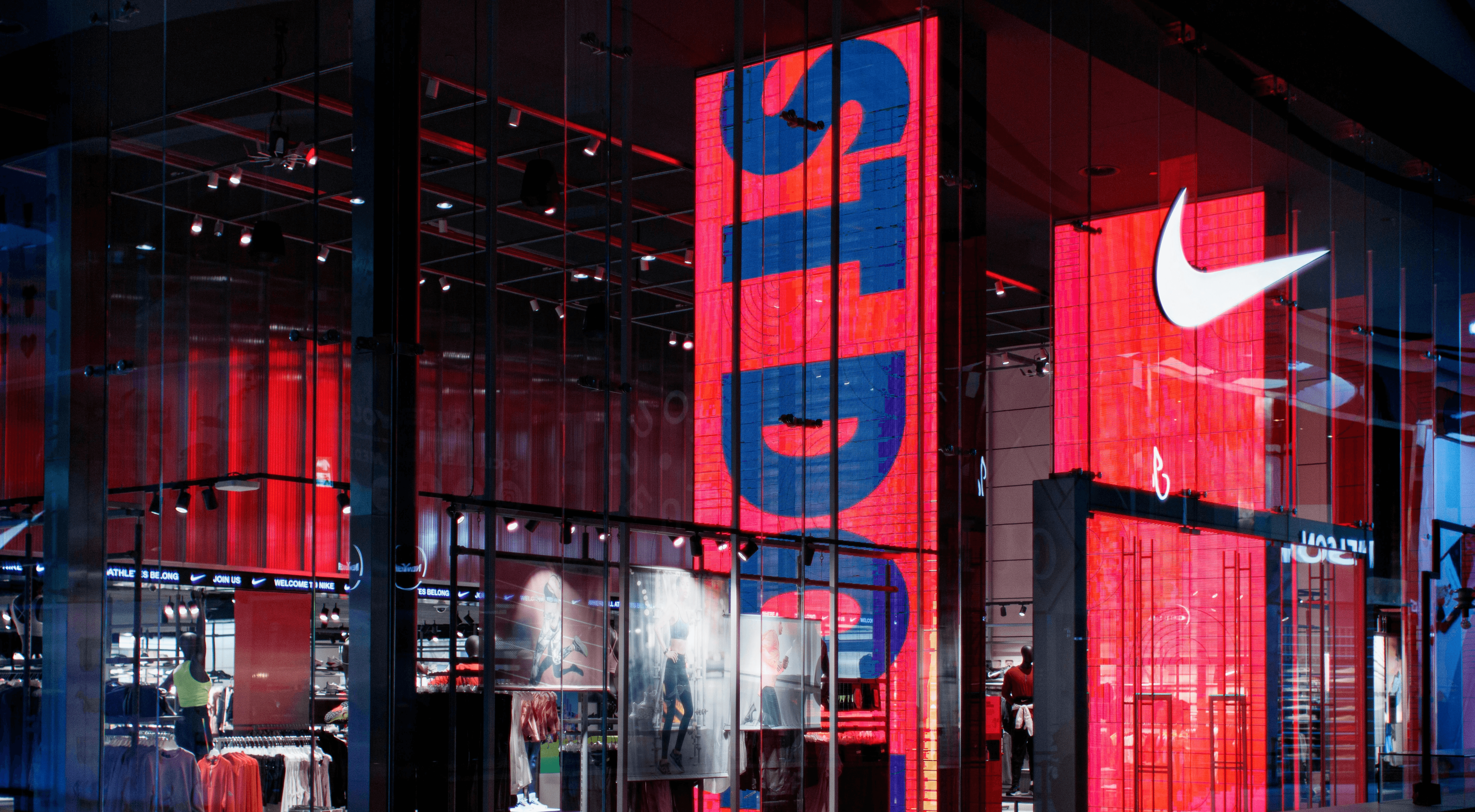
Walk into almost any of India's newly minted flagship stores. The ones with LED walls and app-synced loyalty programs and staff wearing earpieces. What you will find is an unmistakable architectural ambition. India's retail developers have been building at a pace that would have seemed fantastical a decade ago. 8.9 million square feet of retail space was leased across the country's top cities in 2025 alone, a record high according to CBRE South Asia, with new supply jumping 268 percent year-on-year. Anshuman Magazine, CBRE's Chairman and CEO for India, South-East Asia, Middle East and Africa, recently described the surge as a "decisive shift towards quality-led, experience-driven growth," noting that retailers are experimenting with "experiential flagship stores, kiosks, and Gen Z-focused store formats" to drive dwell time and brand engagement.
Now ask the staff member at one of those stores whether the jacket displayed on the mannequin is available in a medium size. Watch them disappear for four minutes. Watch the checkout line coil past the curated athleisure wall. Notice the return counter's handwritten sign. Feel the dissonance.
This is the defining paradox of Indian retail's coming-of-age moment: the country is building at the speed of ambition and operating at the speed of legacy. The infrastructure is modern. The experience design is not. And until Indian brands understand the difference and the economics of that gap, they will keep underperforming in stores they cannot stop building.
The Structural Mismatch
There is a vocabulary problem at the heart of this. When Indian retail executives talk about "experience," they almost invariably mean architecture: the visual merchandising, the immersive zones, the technology theater of QR codes and digital screens. What they less frequently mean is service choreography, the invisible system of cues, flows, transitions, and recoveries that determine whether a customer feels oriented or lost, confident or anxious, remembered or anonymous.
These are not the same thing. A beautiful store with broken service logic does not create aspiration. It creates stress dressed in good lighting.
Service design, the discipline of mapping and engineering how humans move through systems, has been the quiet engine of retail value creation in mature markets for years.
McKinsey research has consistently found that companies with strong customer experience performance outperform on revenue growth, profitability, and shareholder returns. PwC's analysis of retailers that successfully combined experience, digital integration, and operational efficiency found gains of five to fifteen percent in sales per square foot and ten to twenty percent improvements in conversion rates. These are not marginal numbers in an industry operating on thin margins.
In India, the concept has barely registered as a strategy. It is still largely categorized as hospitality, a soft skill domain adjacent to HR, not a hard-edged economic variable adjacent to operations and systems engineering.

The GenZ Disruption
The urgency of this reckoning has been accelerated by a generational shift that Indian retailers still underestimate. Approximately half of India's online fashion and beauty shoppers are now Gen Z. The Economic Times has reported that the traditional linear shopping funnel (awareness → consideration → intent → purchase) has effectively collapsed for this cohort. Their journeys are non-linear, multi-platform, and governed not by brand loyalty in the traditional sense but by something more demanding: the immediate evaluation of whether an experience respects their time and intelligence.
A peer-reviewed study of Gen Z and millennial consumers in Pune found a clear priority ordering. Convenience, defined as the removal of friction in the core journey (discovery, checkout, delivery, returns), had the largest statistically significant effect on purchase intention of any factor tested. Personalization mattered, but it was secondary. Brand values mattered, but they were tertiary. The hierarchy is stark: first, remove the friction; then build the meaning on top.
Gen Z's channel behavior makes this doubly important. This generation does not experience online and offline as separate worlds. They move between a brand's Instagram, its app, and its physical store during a single purchase journey, and they expect perfect continuity at every transition point. As one retail analysis framed it, any disconnect between channels (separate accounts required, inconsistent pricing, returns that don't translate across platforms) is not a minor inconvenience. It is a breach of expectation that ends the relationship.
"Retail's next competitive battlefield is not square footage. It is behavioral intelligence: the architecture of hesitation, confusion, and trust."
What India's Complexity Demands
There is an argument made in certain retail consulting circles that Indian brands simply need to import the service design playbooks that worked in the West. They mean, get cleaner UX, better staff training, smoother omnichannel plumbing and the returns will follow. This argument misunderstands the specific texture of the Indian consumer problem.
Western retail typically optimizes for convenience. Indian retail must optimize for something more fundamental: reassurance. The friction that plagues Indian consumers is not merely logistical. It is psychological. India's retail environments remain extraordinarily heterogeneous; dense cities, fragmented payment systems, multilingual complexity, infrastructure that is world-class in one corridor and unreliable in the next. In this environment, the primary job of good service design is not to delight. It is to reduce uncertainty.
This is the deeper economic logic of the kirana store, the roughly thirteen to fifteen million small family-run grocers that continue to anchor neighborhood commerce across India despite every structural headwind that organized retail can muster. The kirana store survives not because it is cheap, though it often is. It survives because the owner knows the customer's name, their preferred brands, and their payment flexibility. It survives because it offers something that no LED-lit flagship has yet replicated at scale: the elimination of psychological uncertainty. The transaction is trusted before it begins.
Organized retail's fundamental challenge is to engineer that trust at scale without the intimacy that makes it feel natural. This is not a technology problem. It is a design problem. And the distinction matters enormously for where brands should direct investment.

India retail leasing by category, 2025 (% of total absorption). Fashion and apparel's dominance reflects the sector where Gen Z's expectations are highest and service design gaps are most consequential. Source: CBRE South Asia, India Retail Figures H2 2025.
Why Brands Keep Underinvesting
The structural reasons for underinvestment in service design are worth naming clearly, because they are not accidental, they are the logical outputs of the incentive systems that govern Indian retail's expansion phase.
Success in Indian retail has been culturally measured through store count, city expansion, and square footage. These are visible, photographable, pressable. JLL's data shows the top seven Indian cities now hold nearly 92 million square feet of mall stock, up substantially from a year prior. These numbers appear in earnings calls. They get applause at industry conferences. Service design improvements do not have a comparable metric language. Reducing checkout anxiety by 30 percent does not fit neatly into a press release.
Technology has compounded this dynamic. AI-driven styling engines, virtual try-ons, generative recommendation interfaces. The retail technology stack is becoming genuinely impressive, and it is genuinely visible. Investors reward visible modernization. The service logic that connects these tools into a coherent human experience is invisible, and so it goes unfunded. The result is a pathology that is increasingly common in Indian retail: technology without service orchestration. When this happens, technology does not reduce friction. It amplifies it. A broken AI recommendation in a confusing store creates a worse experience than no AI at all.
High frontline attrition is a third structural constraint. When store staff turnover is high (as it is across much of Indian organized retail) the incentive to invest in deep behavioral training and service consistency diminishes. Why engineer a sophisticated service system around people who will not be there in six months? This is a reasonable short-term calculation with a devastating long-term consequence: the service layer never improves, and the brand's physical presence becomes a liability rather than an asset.
A Framework for What Comes Next
The brands that will emerge as winners in Indian retail's next decade will be those that redesign their stores around behavioral intelligence: a systematic understanding of where customers hesitate, where they lose confidence, where they abandon journeys, and what interventions rebuild momentum.
This requires a fundamentally different measurement architecture. Traditional retail KPIs like footfall, conversion, basket size, and occupancy are lagging indicators of outcomes. The leading indicators that matter are behavioral, such as hesitation depth at decision points, abandonment rates by journey stage, staff assistance request patterns, emotional drop-off zones. Most retailers do not yet measure these things. The ones that begin measuring them first will have a compounding advantage.

The Larger Argument
There is a broader historical argument lurking beneath the retail strategy here. The 20th century rewarded companies that mastered manufacturing efficiency; the relentless compression of production costs, the optimization of supply chains, the elimination of slack. The companies that built those capabilities became industrial giants.
The first decades of the 21st century rewarded companies that mastered digital efficiency; the algorithmization of discovery, the compression of transaction costs, the elimination of geographic friction. The companies that built those capabilities became the current giants.
The argument emerging from behavioral economics, service design theory and an accumulating body of retail research is that the next competitive advantage belongs to companies that master behavioral efficiency. The efficiency of systematic reduction of cognitive load, decision fatigue, and uncertainty at scale. Not merely making things easier to buy, but making the experience of buying feel less mentally exhausting.
India, with its extraordinary retail complexity is its density, its linguistic diversity, its layered payment infrastructure, its simultaneous presence of kirana stores and AI-powered flagships. Maybe the world's most demanding laboratory for this kind of innovation. The consumer who can navigate India's retail ecosystem comfortably has been through something genuinely difficult. Brands that make that difficulty invisible will not just win Indian consumers. They will have developed capabilities that no mall expansion can replicate.
The stores are built. The question now is whether the experiences inside them are designed at all.