
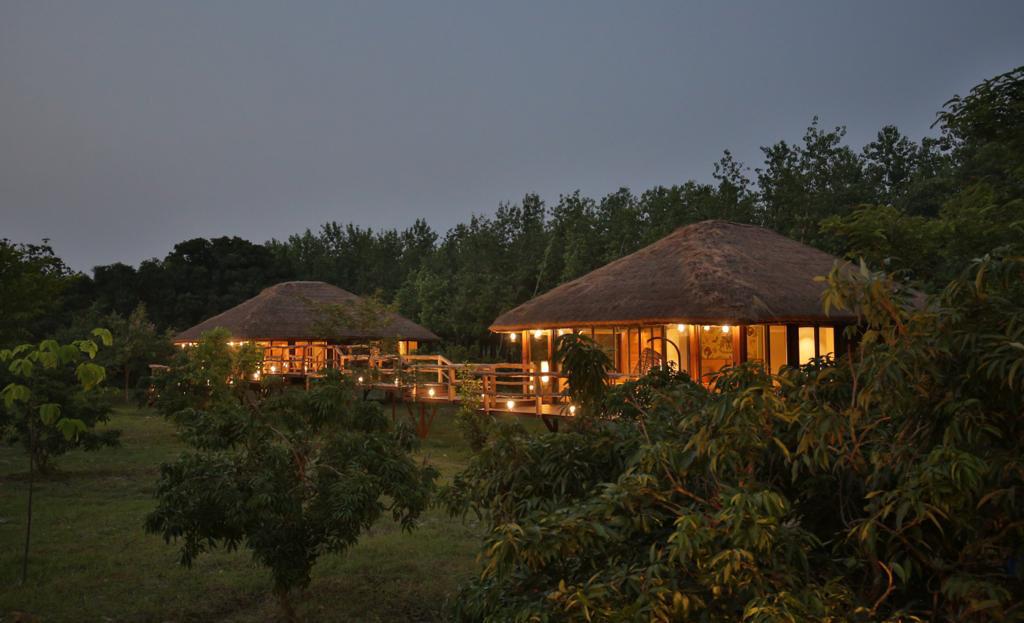
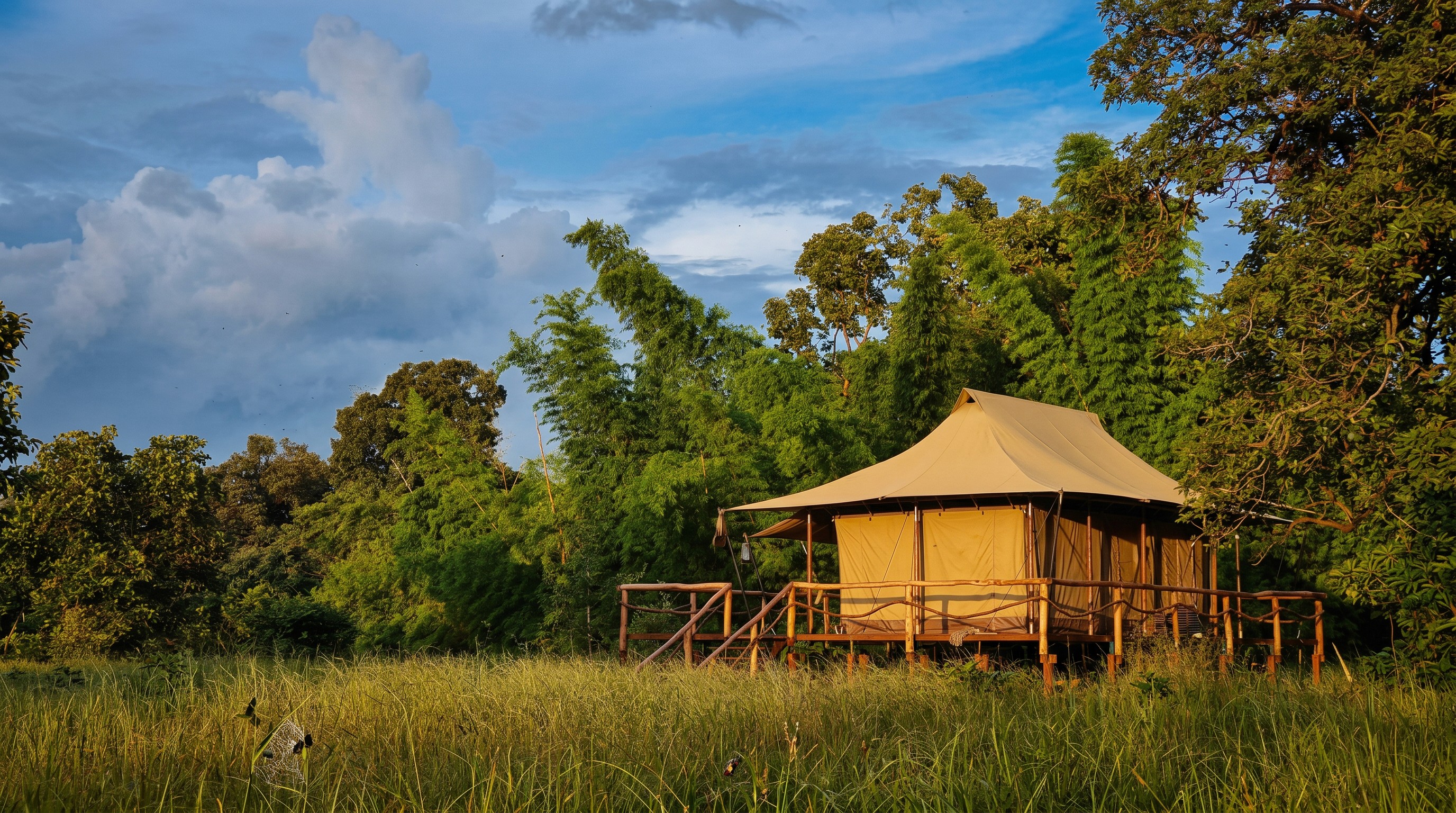
EuMo partnered with Centenary City Developers FZE to design The Range Chalets, a one-of-a-kind luxury safari resort envisioned within a private, man-made game park near Abuja, Nigeria. The project was conceived as a permanent, high-comfort hospitality destination offering an immersive wildlife experience tailored to well travelled expatriates and high net worth families.
Positioned at the edge of a major urban landscape, the resort reimagines the traditional safari model by combining proximity to wildlife with international hospitality standards. The Range Chalets was envisioned as a destination defining retreat that integrates nature, architecture and experience while maintaining a strong connection to the surrounding terrain.
Centenary City Developers FZE
Travel & Leisure
Luxury Tented Resort
Furniture
Landscape integration
Masterplanning
Architecture
Interiors
Furniture Design and Manufacturing

The ambition of Centenary City Developers FZE was to introduce a new hospitality archetype within Nigeria: a luxury wildlife retreat capable of standing alongside globally recognised safari destinations while remaining rooted in its ecological and cultural context. Operating at the intersection of large scale real estate and urban infrastructure development, the client envisioned The Range Chalets as a future ready destination that would elevate the hospitality landscape of the region.
Rather than positioning luxury through scale or spectacle, the project aimed to redefine it through immersion, thoughtful land use and architectural restraint. EuMo was engaged to translate this ambition into a coherent masterplan, architectural strategy and interior language that could meet international expectations while reflecting the authenticity of the African landscape.

Where scale meets environmental sensitivity
The project site extended across a vast acreage within a managed game park, demanding a design approach that minimised environmental impact while remaining durable and operationally viable all year-round. The structures needed to withstand demanding climatic conditions, integrate seamlessly into the landscape and deliver a sense of permanence without visual dominance.
Traditional hospitality models proved unsuitable for this context. Heavy built resorts risked ecological intrusion, while temporary tented camps could compromise comfort, longevity and brand positioning. The design challenge lay in developing a new typology that could combine permanence with the visual lightness of safari architecture.


A new safari typology at the urban edge
EuMo reframed the project around the insight that a luxury wildlife experience could thrive at the edge of a city if the design became part of the landscape rather than an imposition upon it. Guests were not seeking isolation alone but a carefully curated balance between immersion in nature and the reassurance of international standards of comfort and safety.
This perspective shifted the project from being a conventional resort to a spatial experience centred on proximity, balance and environmental restraint. The design strategy therefore prioritised views, privacy and landscape continuity over architectural prominence.


Landscape-led masterplanning and spatial sequencing
EuMo approached the site as a continuous experiential landscape rather than a collection of buildings. The masterplan was organised around a central bowl anchoring shared amenities like reception, lounge, dining, bar and pool creating a social heart that oriented guests upon arrival.
Accommodation was carefully distributed along peripheral ridge lines, preserving uninterrupted visual connections across the terrain and towards the surrounding hills. This strategy ensured privacy, reduced land disturbance and allowed the landscape and wildlife movement to remain the primary visual experience.
Environmental strategies were embedded early in the planning process. Water harvesting and groundwater recharge systems followed the site’s natural contours, reinforcing resilience while working with the site’s existing ecology.

Architecture as minimal footprint infrastructure
In collaboration with international partners, EuMo developed robust, permanent tented structures capable of meeting structural, climatic and operational demands. These structures balanced the visual lightness associated with safari architecture with the durability required for long-term use.
Local materials were integrated where possible, reinforcing a sense of place while ensuring performance and longevity. The architecture was intentionally restrained allowing the landscape, wildlife and the horizon to remain dominant.
Interpreting African ecology through interiors & graphics
Interior environments were designed as extensions of the landscape itself. Extensive research into regional flora, fauna, textures and colour palettes informed a design language that felt rooted in Nigeria, Africa rather than imported.
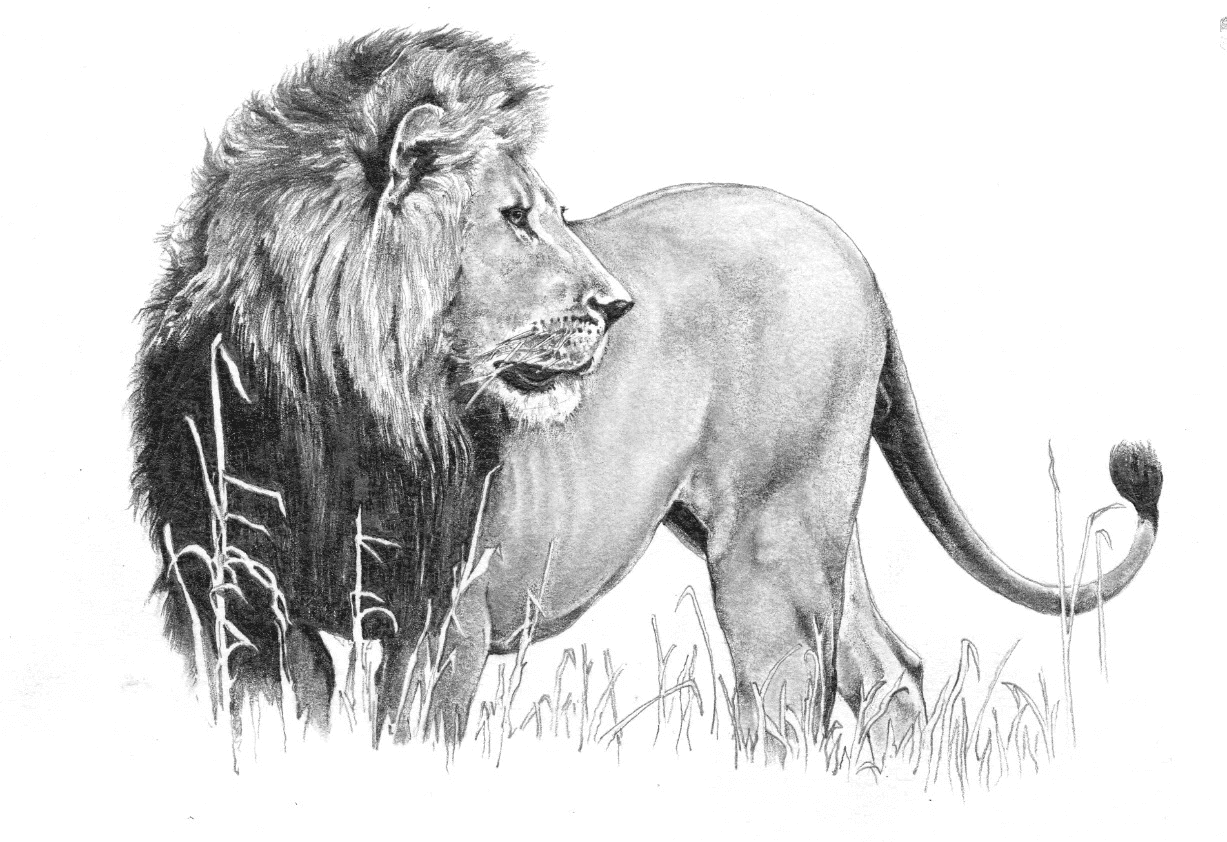
Graphics, imagery and material finishes were carefully curated to evoke wildlife narratives without literal replication. This approach created spaces that felt immersive, refined and culturally grounded that met global luxury expectations while remaining authentic to context.


The Range Chalets establishes a distinctive vision for luxury wildlife hospitality in Nigeria, positioning the project as a future ready experiential destination within the emerging African hospitality landscape.
Business Impact
Introduction of a new hospitality archetype in Nigeria- Creates a luxury wildlife retreat concept capable of competing with global safari destinations.
Strategic destination value for Centenary City- Strengthens the broader development vision by introducing a unique experiential hospitality anchor within the game park landscape.
Globally aligned luxury positioning- Establishes a hospitality concept designed to appeal to international travellers, expatriates and high net worth families.
Integrated masterplan for long term development- Provides a scalable spatial framework that supports future hospitality and tourism expansion within the site.
Strong experiential differentiation- Positions immersion in nature, privacy and landscape continuity as the defining qualities of the hospitality experience.
Strategic design impact by EuMo- Demonstrates how ecological sensitivity, cultural grounding and landscape led planning can create globally relevant hospitality destinations in emerging markets.