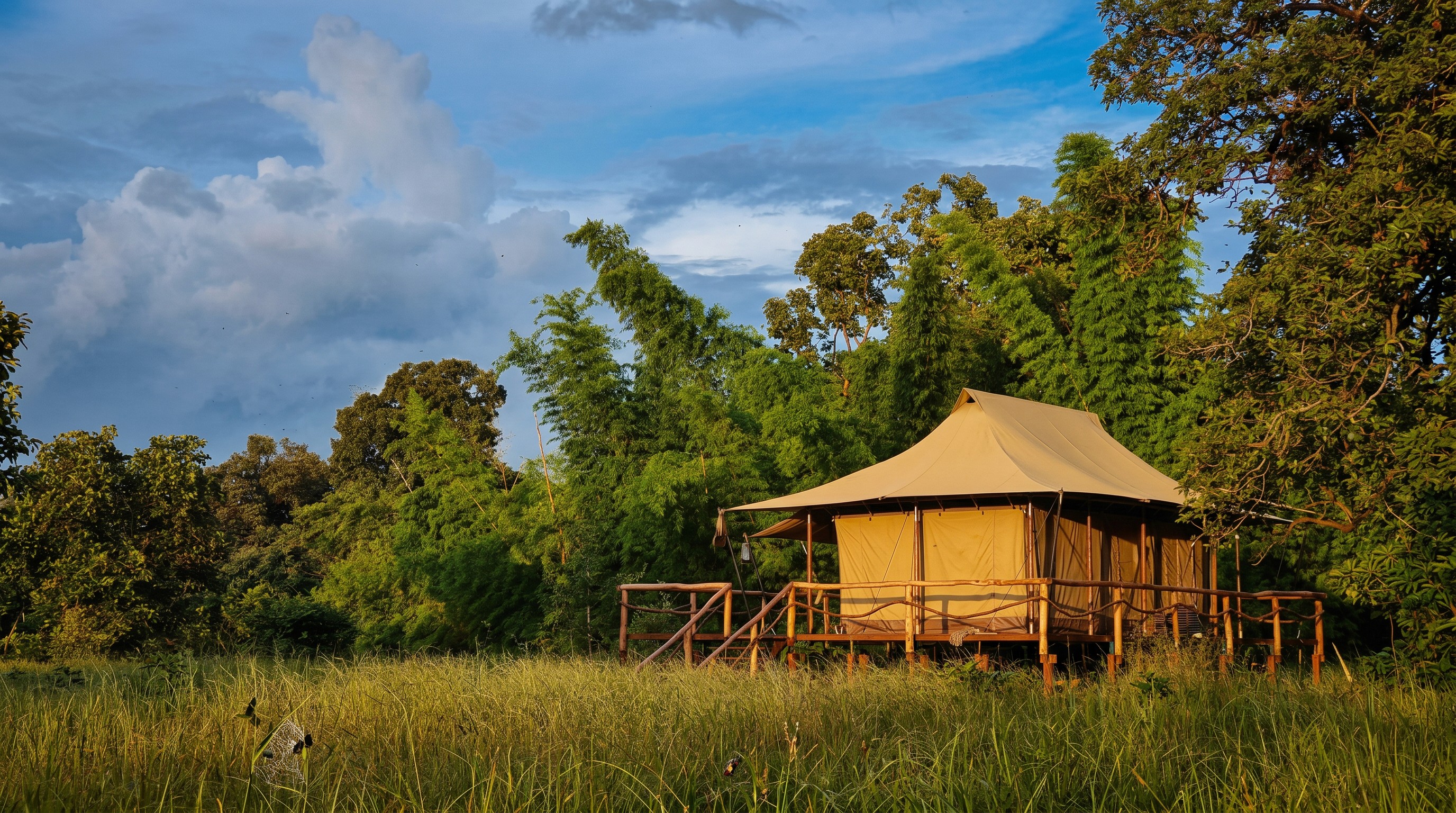

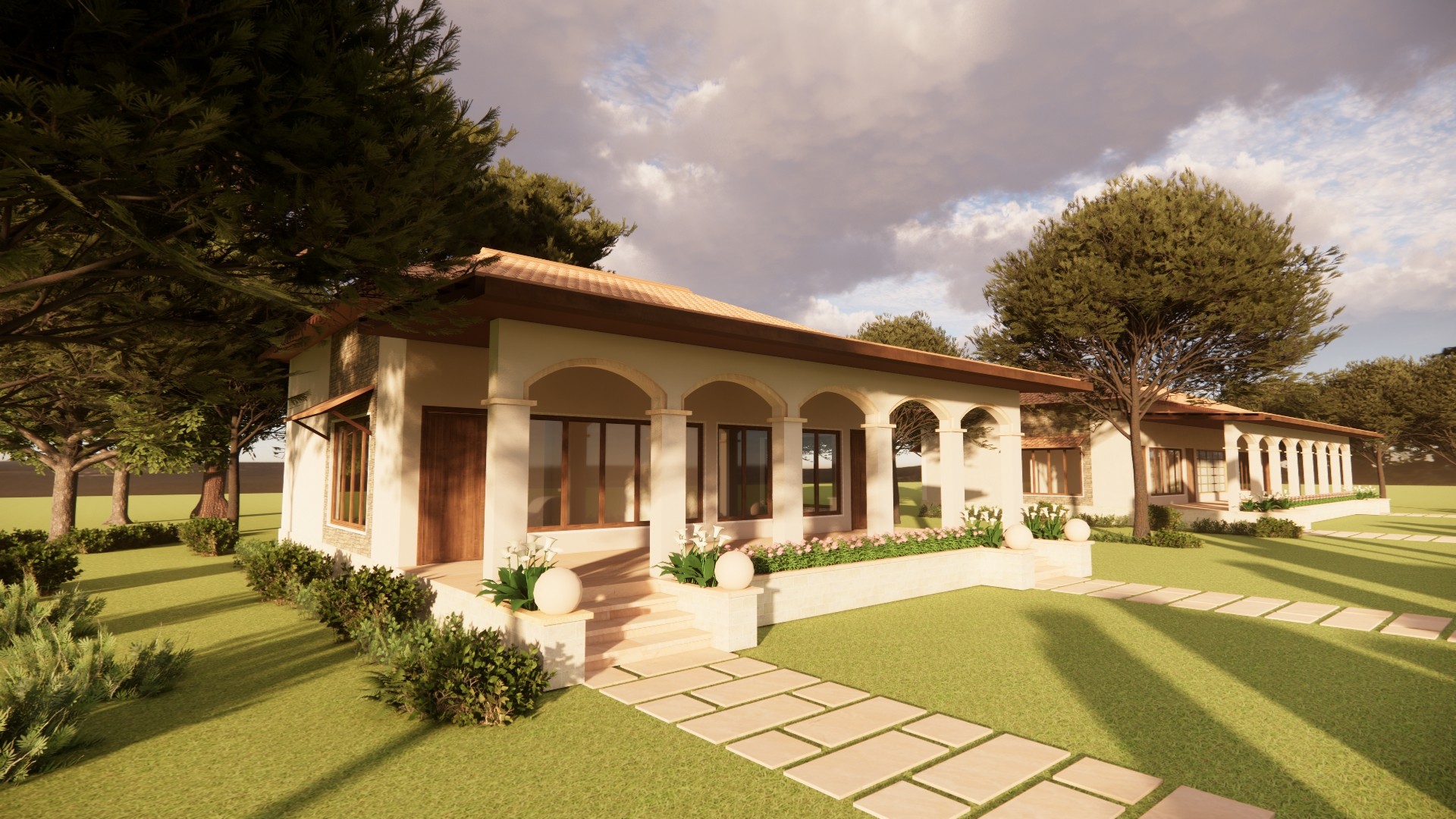
Located in the forested slopes of Dagshai, within the extended hill circuit of Shimla and just two hours from Chandigarh, Woodbury Hills is positioned as a strategic response to shifting tourism patterns. As established hill stations face increasing congestion, Dagshai presents a quieter, high-potential alternative that offers proximity without over-commercialisation.
EuMo envisioned Woodbury Hills as a layered hospitality ecosystem rather than a singular resort. The development integrates villas, apartments, and shared amenities across a steeply contoured site. The core challenge was to establish a cohesive spatial and experiential language that could adapt to the terrain while delivering immersive, nature-led luxury and enabling long-term operational scalability.
Springdale Resort
Travel & Leisure
Branded Residences
Masterplanning,
Architecture
Landscape integration
Interiors
Furniture Design

For Springdale Resort, the ambition extended beyond building a conventional hill resort. The vision was to create a refined, future-ready destination where architecture, interiors, and landscape operate in quiet harmony with the terrain, enabling both retreat and community across multiple stay formats.
The project set out to unlock Dagshai’s potential as more than a weekend escape. It aimed to position the development as a hybrid hospitality model that supports short stays, long stays, and private ownership, while maintaining a strong, differentiated identity in a competitive hill tourism market. This required a balance of experiential richness, operational flexibility, and long-term investment viability.


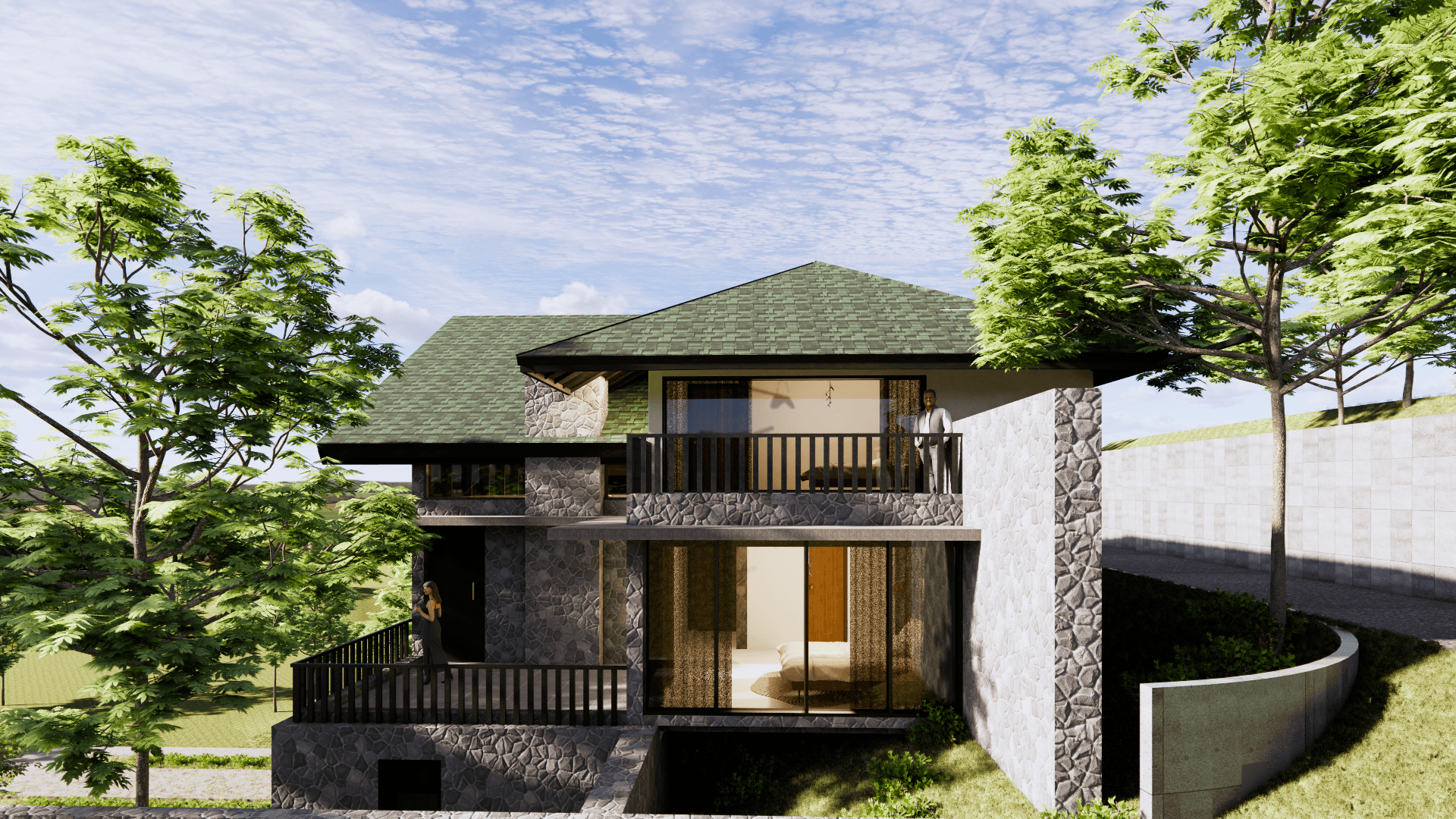
Site & Terrain Intelligence – Designing with the slope as a primary driver
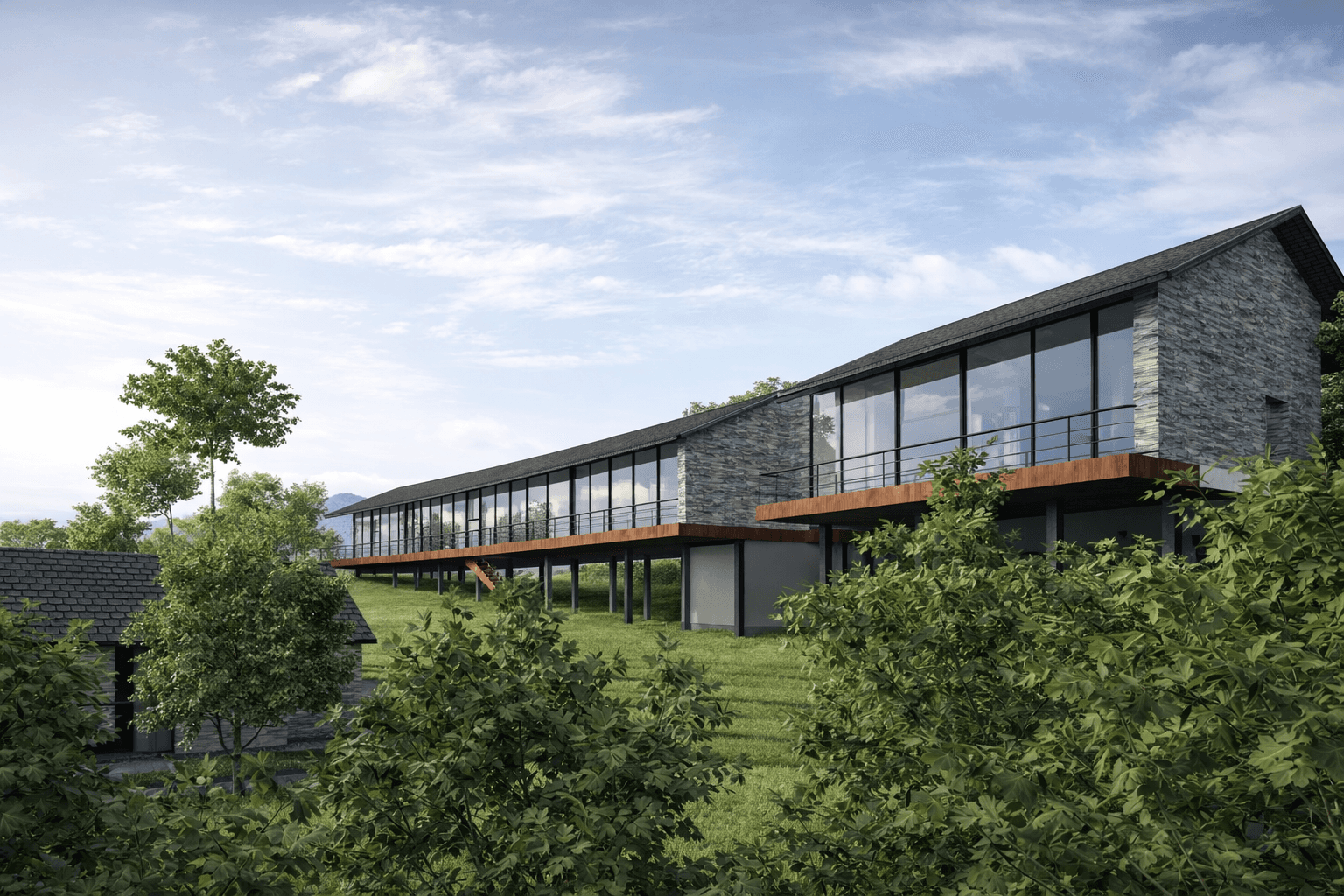
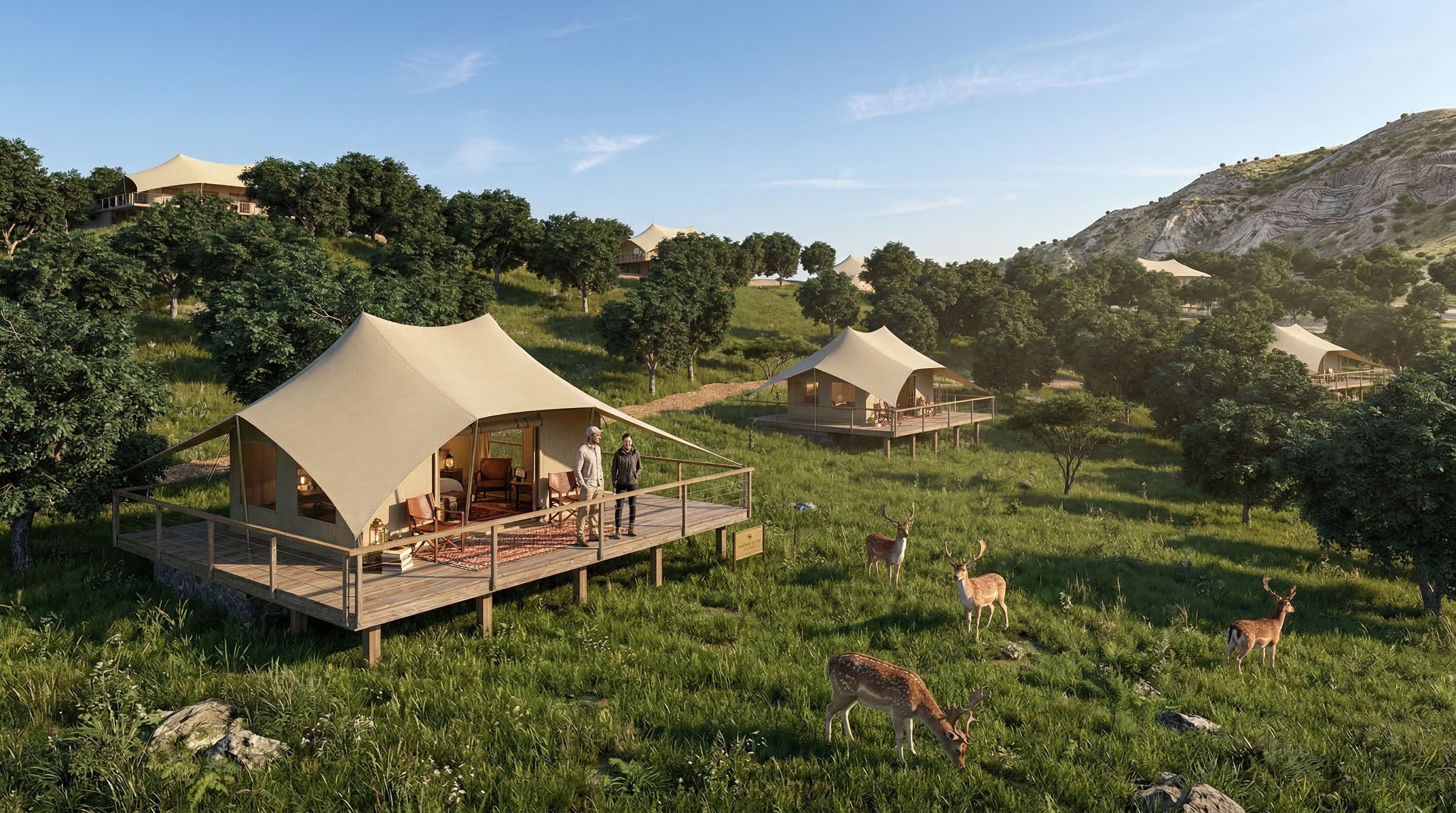
The steep terrain was treated as an opportunity rather than a limitation. EuMo developed split and non-split villa typologies that respond to varying contours, reducing excessive cut and fill while optimising views, daylight, and ventilation.
The clubhouse is positioned strategically between two primary site segments, ensuring seamless internal access while allowing controlled external entry. Located along the mountain edge, it captures both sunrise and sunset views, establishing itself as a visual and social anchor within the development.
Programmatic Intelligence – A Complete / Hybrid Hospitality Ecosystem
Woodbury Hills operates as both a resort and a branded residential development. By integrating varied accommodation formats with curated recreational amenities, the project supports short-term hospitality, extended stays, and private ownership models within one cohesive ecosystem.
This layered program enhances revenue flexibility while ensuring that residential privacy and resort vibrancy coexist without friction.


Spatial Intelligence – Vertical Zoning & Experiential Flow
Spatial zoning is carefully calibrated across both villas and the clubhouse.
Within the villas —
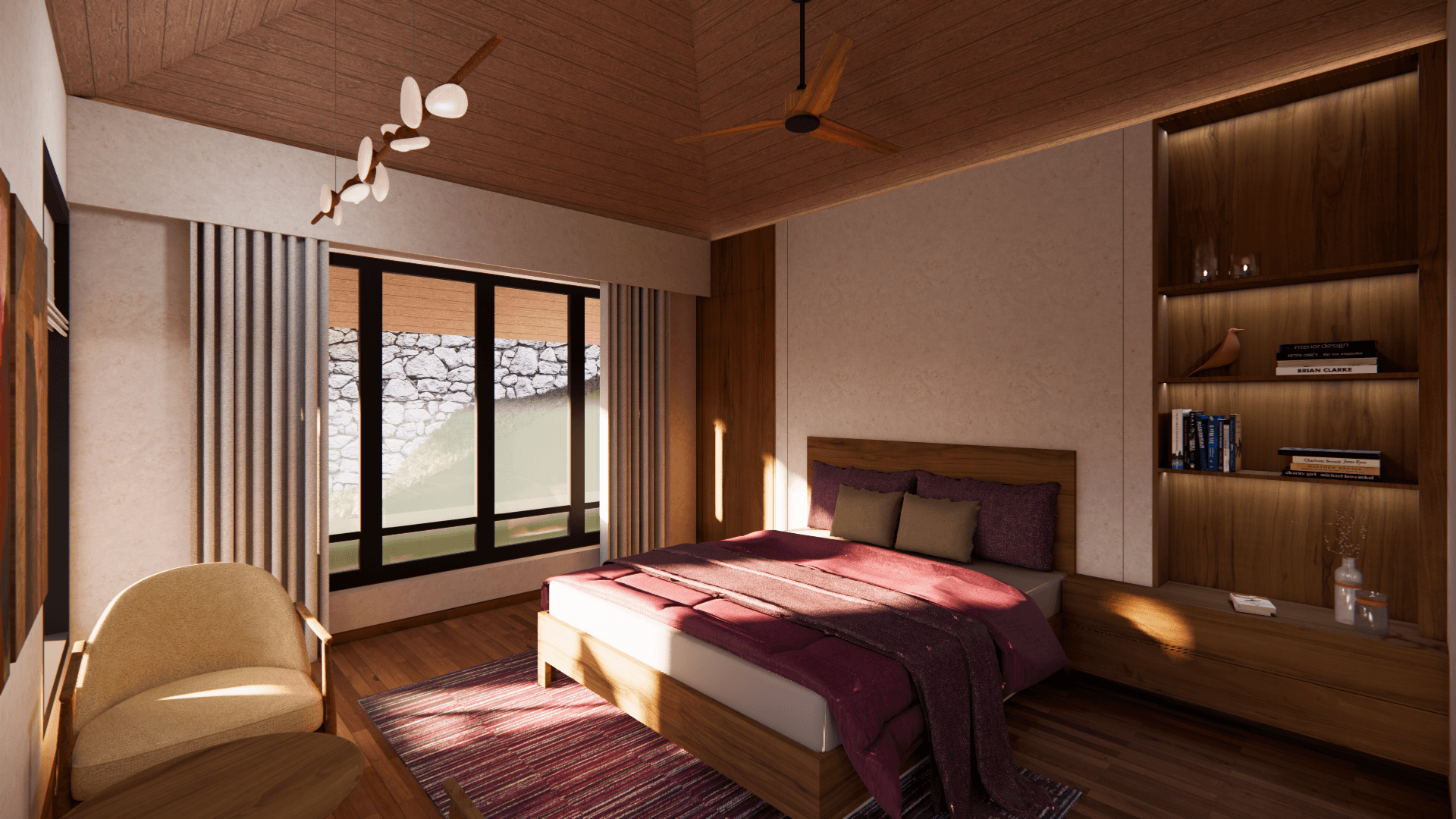
Lower levels adopt earthy palettes and more intimate, grounded functions,
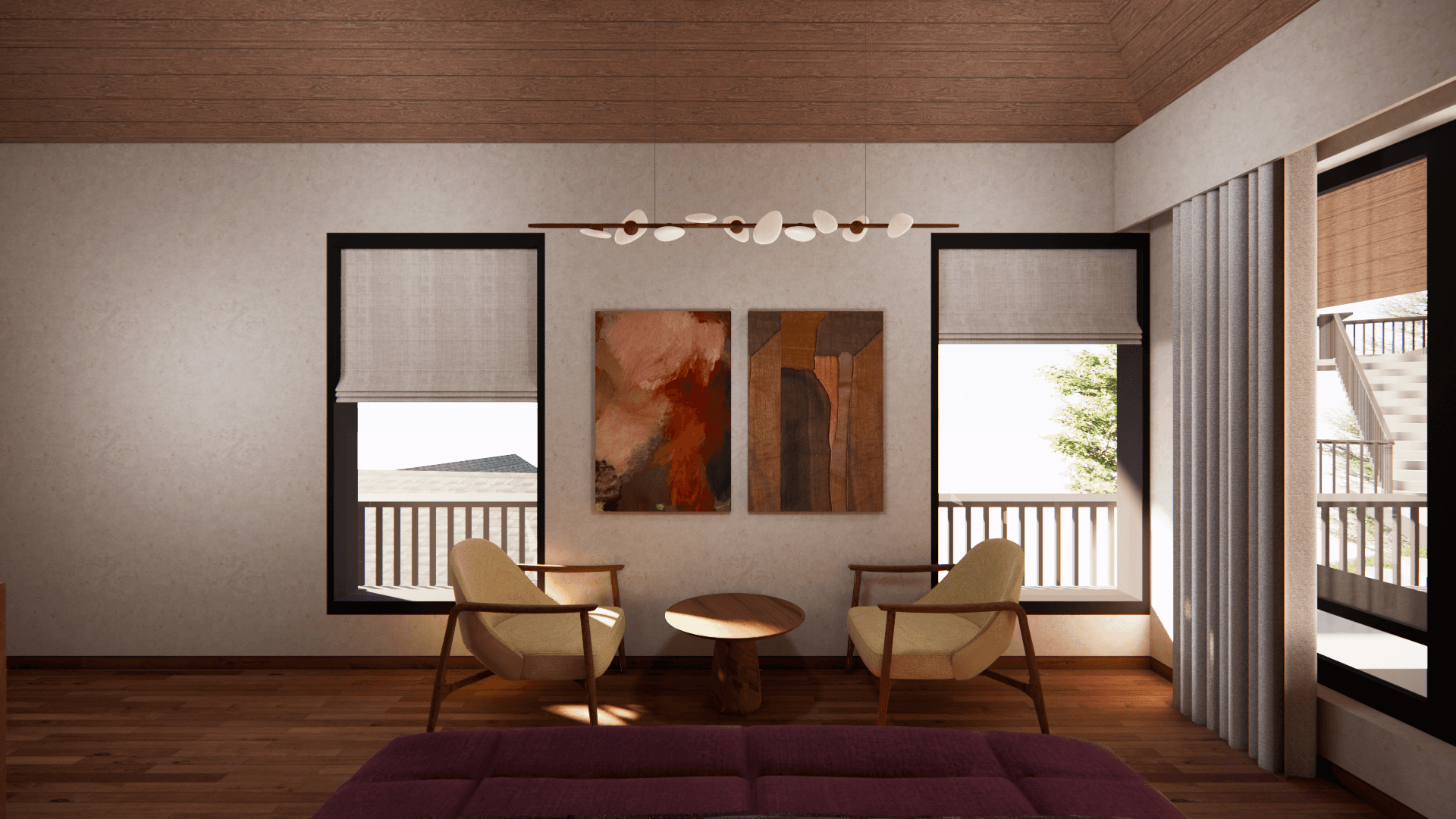
Upper levels open into lighter tones, expansive glazing, and panoramic views—enhancing visual connection to the hills.
Within the clubhouse functions are distributed across three levels based on activity intensity and user behavior —
Quiet zones for wellness and retreat-oriented programs.
Semi-public zones for dining and informal gathering.
Public, high-energy zones for events and social interaction.
This vertical segregation ensures acoustic comfort, experiential clarity, and operational efficiency, allowing multiple activities to coexist without interference.

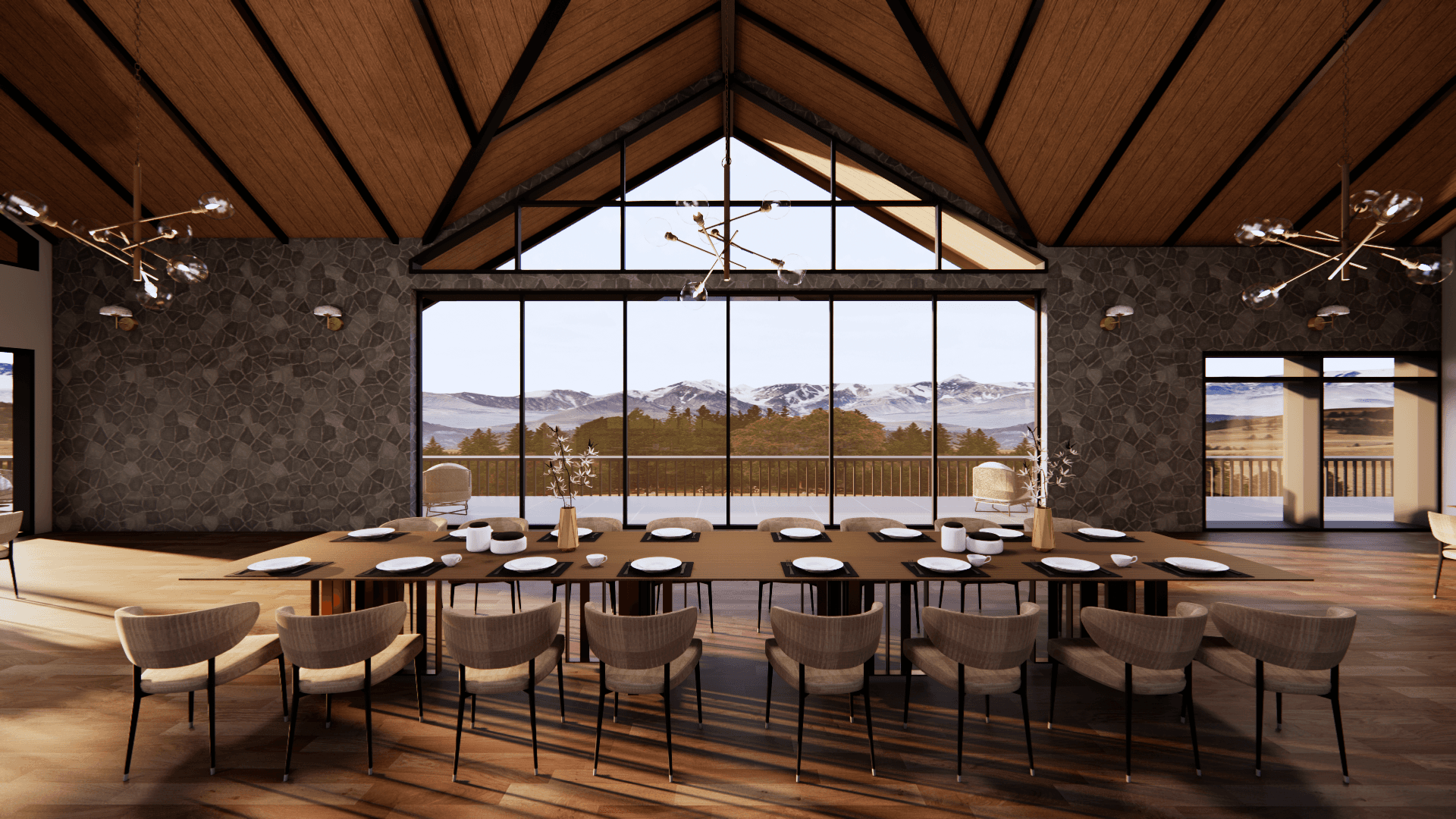
Interior Intelligence – Nature-Led Material Narratives
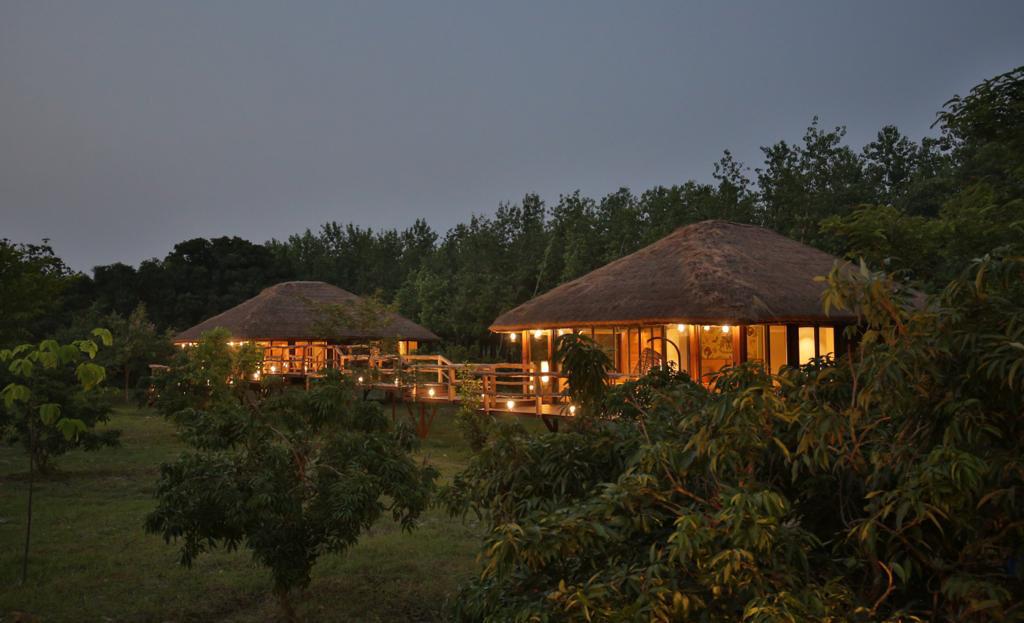
Interior palettes draw directly from the Dagshai landscape, timber textures, stone finishes, muted greens, blues, and warm neutrals. The material approach balances contemporary refinement with regional sensibility, ensuring visual continuity between interiors and exteriors across villas, apartments, and shared spaces.
Furniture, finishes, and detailing are restrained yet intentional, reinforcing long-term durability and branded identity.


Experience Intelligence – From Arrival to Retreat
Arrival sequences, villa thresholds and clubhouse transitions are choreographed to create gradual spatial unfolding. Movement across the slope is experiential rather than purely functional—punctuated by decks, courtyards, double-height volumes and framed views.
The project shifts fluidly between private retreat and community engagement, allowing residents and guests to calibrate their experience, from solitude to sociability.


Woodbury Hills translates a complex hillside into a high-performing hospitality ecosystem. For Springdale Resort, the project delivers both immediate development advantages and long-term strategic gains.
Business and Strategic Impact
Establishes a hybrid resort and branded residences model, enabling multiple revenue streams across hospitality, long-stay, and ownership formats
Positions the development as a premium alternative to Shimla, capturing demand for quieter, design-led mountain retreats
Leverages proximity to Chandigarh to drive consistent occupancy and weekend-driven demand
Creates a central clubhouse as a destination anchor, unlocking additional revenue through events, dining, and external access
Enhances asset value through view-maximising, contour-responsive planning, improving saleability and long-term returns
Enables phased execution and financial flexibility through modular villa typologies, reducing development risk